
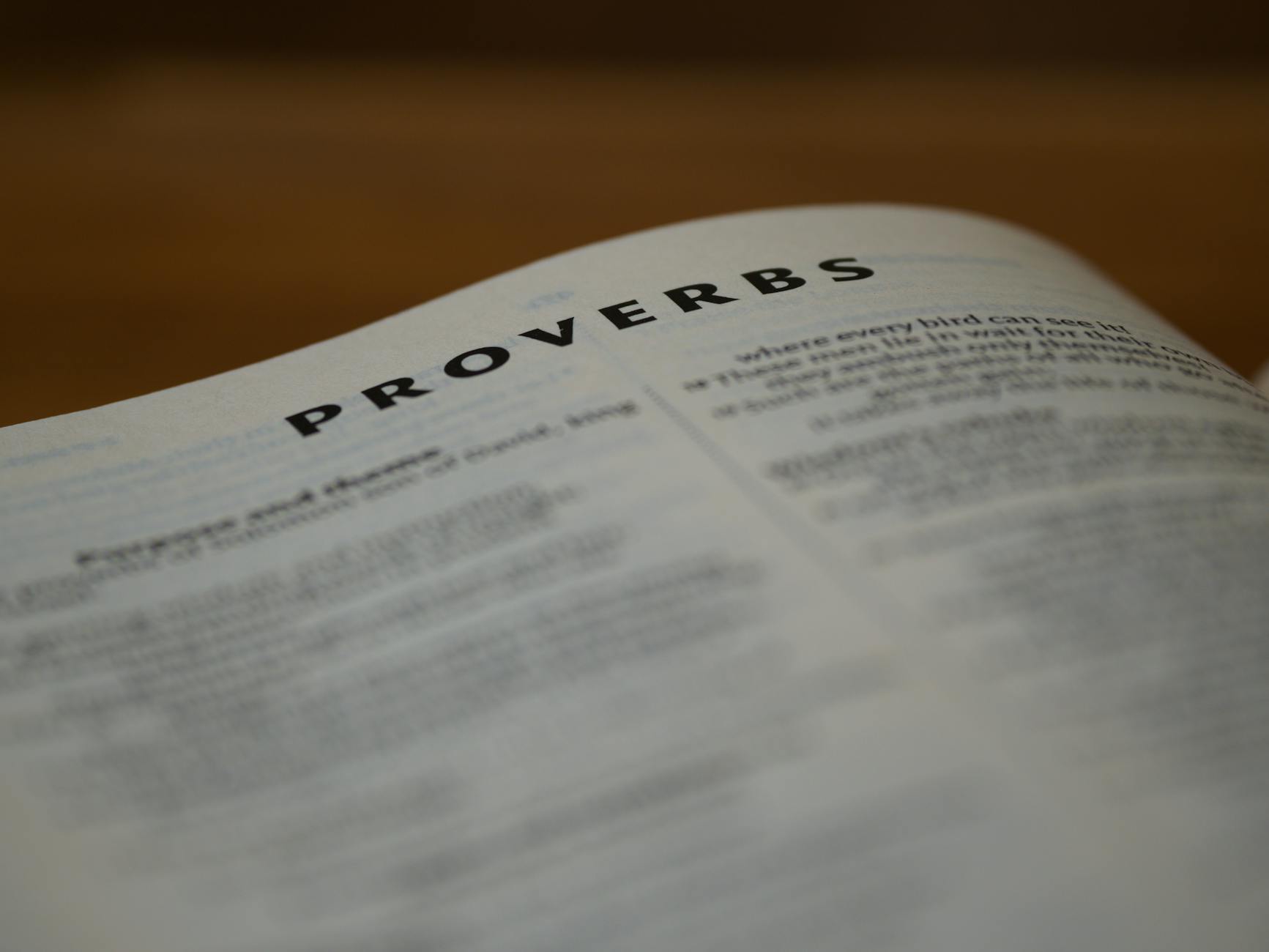
Proverbs 15 continues to highlight contrasts between wisdom and folly, particularly through speech, attitudes, and responses to correction. The power of words is emphasized; they can either heal or harm, calm or provoke. A soft answer turns away wrath, while a harsh word stirs up anger. Wise people use their words to build up others, offering encouragement and speaking truthfully. The tongue of the wise is described as a tree of life, reflecting how life-giving speech originates from a heart filled with wisdom (vv. 1-4, 7, 23, 26, 28).
Oh Lord, grant me the wisdom and the ability to speak in a more appropriate manner. I want to communicate truth in love and strive to be more like You in my interactions (Eph. 4:15, 29).
Proverbs 15 is also rich in practical wisdom for daily life and relationships, particularly regarding receiving correction and instruction. The fool despises correction, but the wise recognize it as a path to growth. Listening to reproof leads to understanding and, ultimately, to life itself. This chapter portrays teachability as a hallmark of wisdom and underscores the importance of humility before instruction, which reflects a proper fear of the Lord (vv. 5, 10, 12, 31-33).
Father, please have mercy on me and correct me as You see fit. Please do not rebuke me in Your anger (Psa. 38:1). I have an open heart that is willing to be molded (Isa. 64:8). Help me also to know when I should relent, versus standing firm in my convictions.
There is also much said in Proverbs 15 about joy and contentment within the heart. A cheerful heart brings life, while a crushed spirit saps it away (vv. 13-15). True happiness flows from righteousness, peace, and godly relationships, rather than from material gain (vv. 16-17).
Oh Father, please help my wife, my children, and me to be content with what You provide. May we be good stewards of the blessings You grant us. Grant me, also, wisdom and courage to utilize those blessings fully and to enjoy what is set before me here and now (Matt. 25:14-30; 1 Cor. 4:1-2; 1 Pet. 4:10).
You are the great and awesome God of heaven and earth. I bow before You, asking that You would shape me, and refine me, through Your correction (Heb. 12:3-11). May I also be open to the counsel of others in my sphere of influence, that their words may provide sound guidance (Prov. 15:22). I pray through Your Son, Jesus Christ, and in His name, I give thanks for these things (Col. 3:17). Please bless us as we seek Your guidance. Amen.

 We Wish to See Jesus