Category: Christian Living

Biblical teaching about discipleship, character, holiness, wisdom, relationships, and daily faithfulness.

  • God is Alive, Dare to Stand!

    When God called Moses to the burning bush and commissioned him to be a leader among the Israelites so that He might rescue them from their Egyptian bondage, God instructed Moses to approach Him in a most holy manner.

    5 Then He said, “Do not draw near this place. Take your sandals off your feet, for the place where you stand is holy ground.” 

    6 Moreover, He said, “I am the God of your father—the God of Abraham, the God of Isaac, and the God of Jacob.” And Moses hid his face, for he was afraid to look upon God.

    ~ Exodus 3:3-6

    This situation is reminiscent of how the Commander of the Lord’s army spoke to Joshua! As the period of invasion and conquest in biblical history began, a celestial being appeared to Joshua to encourage him. During their meeting, the Commander of the Lord’s army instructed Joshua to approach him in a holy manner also.

    13 And it came to pass, when Joshua was by Jericho, that he lifted his eyes and looked, and behold, a Man stood opposite him with His sword drawn in His hand. And Joshua went to Him and said to Him, “Are You for us or for our adversaries?”

    14 So He said, “No, but as Commander of the army of the Lord I have now come.” And Joshua fell on his face to the earth and worshiped, and said to Him, “What does my Lord say to His servant?”

    15 Then the Commander of the Lord’s army said to Joshua, “Take your sandal off your foot, for the place where you stand is holy.” And Joshua did so.

    ~ Joshua 5:13-15

    Notice that the “Commander of the Army of the LORD” appears to Joshua, and in response, Joshua quickly falls on his face and worships this being. Like Moses at the burning bush, Joshua is instructed to take off his sandals (Exod. 3:5-6), and as their conversation continues, the text refers to this Commander as the LORD (Josh. 6:2). This indicates that the Commander of the Army of the LORD is a manifestation of God Himself, as angels do not accept worship from men (Rev. 19:10; 22:9)…

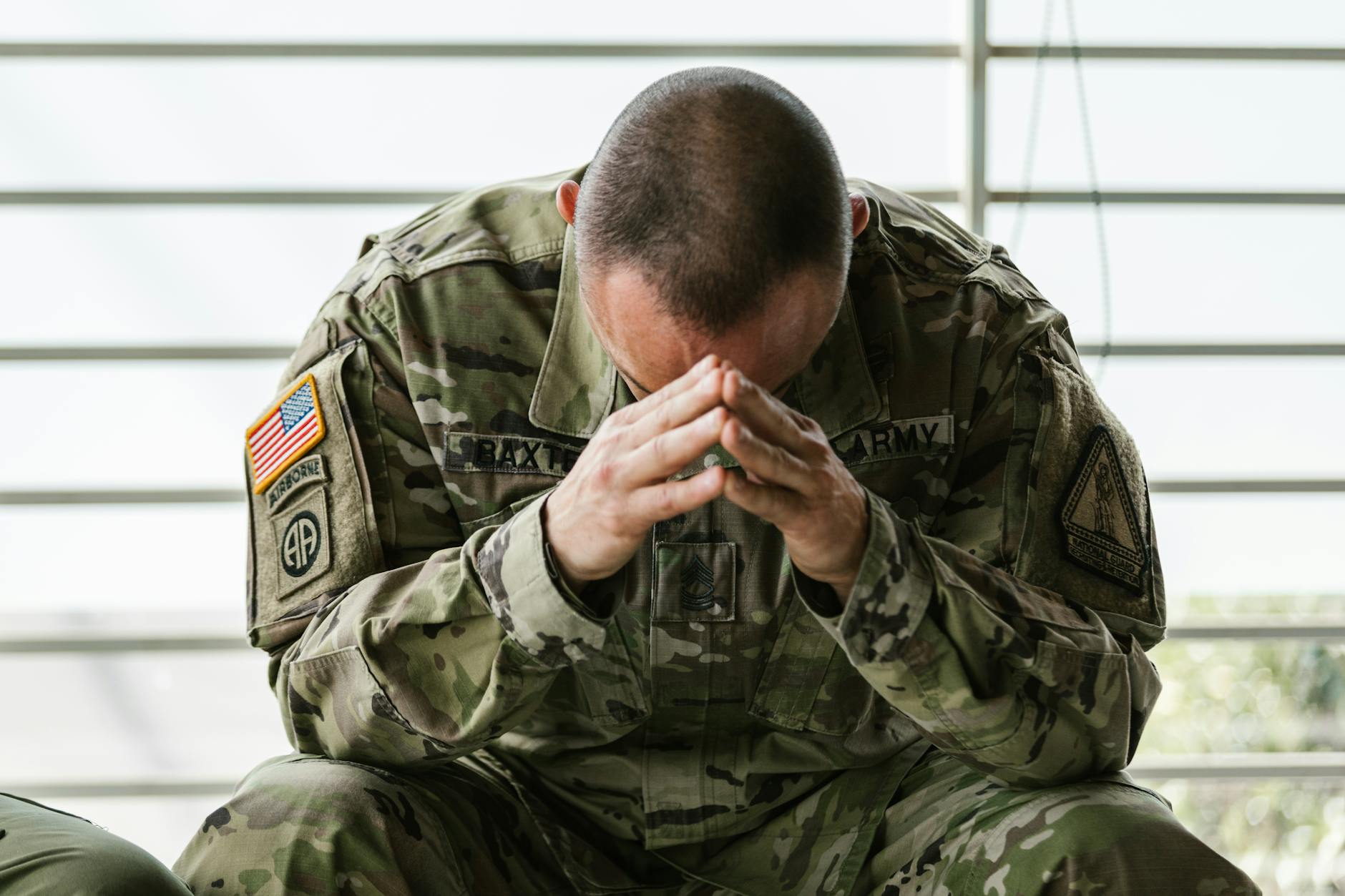
    Joshua faced a significant challenge as the people of Israel approached the heavily fortified city of Jericho. He needed to be confident that those on Israel’s side were more powerful than those against them! God fights for His people, and a man with a drawn sword symbolizes His presence with Joshua!! For us today, we are aware that there is a spiritual battle being waged between God and Satan. When a person fights alongside God, victory is guaranteed! The Christian soldier is to be equipped with the armor of God (Eph. 6:10-20), while God’s Son serves as the captain of the Christian army (Heb. 2:10)!! Soldiers of Christ, arise. 

    Our God, He is Alive (Exod. 3:14)… Dare to stand like Joshua (Josh. 24:15)!

  • Waking Up Early

    Notably, figures such as Abraham, Moses, Joshua, Samuel, David, Gideon, Hezekiah, and Jesus made the most of the early hours.

    Rising early is a habit that many significant figures throughout history have embraced. Whether it’s to seize the quiet moments of dawn, to embark on essential tasks, or to dedicate time for personal reflection, waking up early sets a powerful tone for the rest of the day. Even the most minor step forward, taken in the early hours, can set the stage for significant progress. Let the examples from historical and biblical figures inspire you:

    • Genesis 21:14, So Abraham rose early in the morning, and took bread and a skin of water; and putting it on her shoulder, he gave it and the boy to Hagar, and sent her away. Then she departed and wandered in the Wilderness of Beersheba. (Regarding the monumental occasion of Abraham sending away Hagar and Ishmael) 
    • Genesis 22:3, So Abraham rose early in the morning and saddled his donkey, and took two of his young men with him, and Isaac his son; and he split the wood for the burnt offering, and arose and went to the place of which God had told him. (When God tested Abraham’s faith concerning Isaac)  
    • Genesis 28:18, Then Jacob rose early in the morning, and took the stone that he had put at his head, set it up as a pillar, and poured oil on top of it. (After Jacob dreamed of a ladder reaching to heaven, with the angels of God ascending and descending on it)
    • Exodus 24:4, And Moses wrote all the words of the Lord. And he rose early in the morning, and built an altar at the foot of the mountain, and twelve pillars according to the twelve tribes of Israel. (When the children of Israel affirmed their covenant with the LORD) 
    • Exodus 34:4, So he cut two tablets of stone like the first ones. Then Moses rose early in the morning and went up Mount Sinai, as the Lord had commanded him; and he took in his hand the two tablets of stone. (When Moses made two new tablets and presented himself to God on Mount Sinai)
    • Joshua 3:1, Then Joshua rose early in the morning; and they set out from Acacia Grove and came to the Jordan, he and all the children of Israel, and lodged there before they crossed over. (As Joshua set out to cross the Jordan River and to invade & conquer the land of Canaan)
    • Joshua 6:12, And Joshua rose early in the morning, and the priests took up the ark of the Lord. (In preparation for Joshua, the priests, and the men of war to march around the city of Jericho)
    • Joshua 7:16, So Joshua rose early in the morning and brought Israel by their tribes, and the tribe of Judah was taken. (To investigate/discover where sin was being committed/hidden from within the camp)
    • Judges 6:38, And it was so. When he rose early the next morning and squeezed the fleece together, he wrung the dew out of the fleece, a bowlful of water. (When Gideon sought assurances from God)
    • 1 Samuel 15:12, So when Samuel rose early in the morning to meet Saul, it was told Samuel, saying, “Saul went to Carmel, and indeed, he set up a monument for himself; and he has gone on around, passed by, and gone down to Gilgal.” (When Samuel confronted Saul for transgressing the LORD’s command)
    • 1 Samuel 17:20, So David rose early in the morning, left the sheep with a keeper, and took the things and went as Jesse had commanded him. And he came to the camp as the army was going out to the fight and shouting for the battle. (The day on which David slew Goliath, the giant Philistine warrior)
    • 2 Chronicles 29:20, Then King Hezekiah rose early, gathered the rulers of the city, and went up to the house of the Lord. (When Hezekiah brought about spiritual reforms in the southern kingdom of Judah)
    • Mark 1:35, Now in the morning, having risen a long while before daylight, He went out and departed to a solitary place; and there He prayed. (Jesus started the morning in communion with the Father before preaching throughout Galilee and casting out demons)

    Some individuals are naturally more inclined to be “morning people” than others. While I don’t intend to insist that everyone should rise earlier, there is value in waking up early, particularly when facing significant responsibilities or tasks. Notably, figures such as Abraham, Moses, Joshua, Samuel, David, Gideon, Hezekiah, and Jesus made the most of the early hours. It’s interesting to observe that these leaders from different times all recognized the benefits of a head start on their days. Regardless of personal preferences and routines, it’s worth considering the advantages of rising early!

  • Philip’s Profound Forgiveness 

    Many hold onto resentment, withholding forgiveness because they doubt the person who caused them pain has genuinely changed (or ever will). Some offenses resonate so deeply that these individuals adamantly believe they could never extend forgiveness. Profound hurts such as betrayal, the agonies of torture, the realities of child abuse, or the tragedy of murder leave lasting scars. As a result, the path to forgiveness can feel challenging.

    In Acts chapter six, however, we encounter the powerful story of Stephen and Philip, who were chosen alongside five others to address the needs of Grecian widows in Jerusalem. They exemplified true devotion and were filled with faith, wisdom, and the Holy Spirit. Tragically, Stephen met a brutal end, stoned to death for his unwavering belief in Jesus, with Saul of Tarsus present endorsing the act of violence. As persecution intensified, the disciples scattered, preaching the good news wherever they went. Philip boldly proclaimed Jesus and His Kingdom in Samaria and along the road to Gaza, where he shared the Gospel with the Ethiopian eunuch. Eventually, he settled in Caesarea, raising four prophetic daughters. Consider the striking moment when the Apostle Paul—once the very man who had consented to Stephen’s persecution—stayed with Philip during his travels in Caesarea (Acts 21:8-9). Here was a man who had inflicted tremendous pain, now transformed and striving for righteousness, and Philip welcomed him into his home! Would we have the courage to embrace someone as this? This doesn’t mean we should forgo discernment or wisdom; Paul had spent years proving his profound transformation… But Philip’s decision to extend fellowship and forgiveness to Paul is a profound example of grace and the strength to forgive even those who have deeply hurt us. 

    Many have faced far more grievous harm than I have. While I can’t fathom the pain of losing a loved one to murder, I understand the sting of betrayal and deceit. I, too, wrestle with deep scars making forgiveness a formidable challenge. Yet I am also reminded of Jesus—blasphemed, spat upon, tortured, publicly shamed, and crucified, all for my sins! If I can humbly accept that Jesus died for me, and if I can forgive myself, recognizing that both Jesus and His Father are willing to forgive me—despite my repeated failings—then I must summon the strength to delve deep within and forgive those who have wronged me, regardless of the depths of their transgressions (Matt. 6:15).

    30 And do not grieve the Holy Spirit of God, by whom you were sealed for the day of redemption. 

    31 Let all bitterness, wrath, anger, clamor, and evil speaking be put away from you, with all malice. 

    32 And be kind to one another, tenderhearted, forgiving one another, even as God in Christ forgave you.

    ~ Ephesians 4:30-32, NKJV

  • Leaving All to Follow Christ

    Driving across I-77 through Columbia, SC, I grew up looking out my window and seeing some swampy wetlands that could not be built upon. Once, I remarked to my dad how great it would be to live on such an open prairie, but he quickly informed me about the marshy area’s unsuitability for construction. Fast forward about 15 years, and news broke in the local community that a contractor had bought all that land to build a neighborhood hub. After years of litigation, he ultimately had to relinquish the land upon realizing he couldn’t develop a marshy wetland. Despite his initial aggressiveness in acquiring the land and gaining much notoriety, he was left embarrassed, unable to finish what he started. On the one hand, I can admire someone’s zeal and readiness to initiate such a significant project, investing resources I could only dream of. But on the other hand, it reminds me of the wisdom found in counting the cost, as Jesus advised:

    25 Now great multitudes went with Him. And He turned and said to them, 

    26 “If anyone comes to Me and does not hate his father and mother, wife and children, brothers and sisters, yes, and his own life also, he cannot be My disciple.  

    27 And whoever does not bear his cross and come after Me cannot be My disciple.  

    28 For which of you, intending to build a tower, does not sit down first and count the cost, whether he has enough to finish it—  

    29 lest, after he has laid the foundation, and is not able to finish, all who see it begin to mock him,  

    30 saying, ‘This man began to build and was not able to finish’? (Luke 14:25-30, NKJV)

    Jesus emphasized that following Him requires a life defined by complete and utter devotion. He taught that one’s love for Him should be so profound that it eclipses all other relationships, even those with parents, spouses, children, and siblings. This calls into question the concept of self-sacrifice in Christian belief and challenges individuals to consider whether they are genuinely willing to dedicate themselves to following Jesus.

    If Jesus had left it right there, it would appear that people can accept or reject Him as Lord with no future challenges. However, Jesus did not conclude His message by advising individuals to weigh the cost of accepting Him as Christ, implying that one could walk away without consequences. He continued in this manner:

    31 Or what king, going to make war against another king, does not sit down first and consider whether he is able with ten thousand to meet him who comes against him with twenty thousand?  

    32 Or else, while the other is still a great way off, he sends a delegation and asks conditions of peace.  

    33 So likewise, whoever of you does not forsake all that he has cannot be My disciple. (Luke 14:31-33)

    Suppose a great army was approaching, and you realized you lacked the resources to stand against such a force! Wouldn’t it make sense to do everything in your power to seek conditions of peace from this impending threat? You would aim to make peace, likely accepting whatever terms the more potent force offers. The spiritual parallel here is significant; Jesus is returning to confront those who have opposed Him (Rev. 19:11-21). God has outlined His conditions for peace, Jesus is one day coming in vengeance with His mighty angels (2 Thess. 1:8-9), and I would like to know what those conditions are and how we can accept them (Rom. 3:21-26; 6:1-7, 23). It’s essential to read the Bible and pray to understand this better. The terms Jesus offers are non-negotiable, and rejecting His call to discipleship carries eternal consequences (John 5:25-30). Someday, everyone will recognize His authority (Phil. 2:9-11). Let us humbly accept His terms of peace and embrace the path of discipleship now.

  • Superficial Versus True Christianity – The Choice is Yours

    Maybe it’s just the algorithm in my social media, but many people (even high-profile ones) are taking a stand against many of the evils in our society. Additionally, many are even invoking the name of Christ in their speeches, which, on one hand, gets me very encouraged. On the other hand, I’m mindful that there can be a superficial calling upon the name of the Lord that has no substance, and doing that kind of thing can lull us into a false sense of security (Matt. 7:22-24).

    I can remember when this country was brought to its knees, so to speak. On September 11th, 2001, thousands of American lives were lost because of horrible acts of evil, and as a result, there seemed to be a great awakening among our fellow citizens. Even among the politicians in Washington, it seemed people were putting away their differences to do what was right. On television, they held hands, sang gospel hymns, and attended church services. Furthermore, Americans were united with a greater sense of patriotism. But how long did all of that last?

    We ought to learn from the history of God’s people. Jeroboam II ruled when the nation of Israel seemed to flourish (2 Kings 14:23-29). Israel’s military was powerful. They had expanded their territory to the furthest reaches since the days of King Solomon. Politically, they appeared to be strong on the world stage. Economically, business was booming! The problem was that the people (including their leaders) weren’t genuinely seeking after God, and as a result, the end came very quickly, and the Assyrians soon toppled them (2 Kings 17:1-41). All those blessings during Jeroboam’s time almost make it seem like God said, “If you would turn to me, things could be so much better. This is how it could be if you genuinely sought after Me and followed My ways.” Unfortunately, that was not the case for Israel, as their ascent was based on superficial means.

    I perceive an opportunity for our great blessing here within our borders. Who doesn’t want our military to be strong? We want righteousness to prevail over wickedness socially. We want the economy to be robust. We want peace and brotherly love to reign. Many wish for Christianity to flourish. Still, if it’s just going to be some superficial Christianity that we embrace, if we’re going to be weak in our convictions, or if we’re going to be halfhearted — that’s not going to cut it. We need complete allegiance to Christ. Satan would love nothing more than for you to have a false sense of security in America’s military, our economy, and even brotherly love. But at the end of the day, all those fears that people have about how things may have been going for some time will ultimately come to fruition if we do not seek God wholeheartedly (Mark 12:30).

    As an individual, I pray for an awakening among the borders of the land where we dwell. I pray for a worldwide GREAT awakening (2 Tim. 2:1-7). But God Almighty, please do not let me not fall prey to a false sense of security or even a false message of who You are and what You want from my life (Col. 2:8)! Reveal Your true character to me through Your word, Father. Moreover, reveal to me (through Your word) the one TRUE Jesus (2 Pet 1:4; Col. 1:27). I pray that all honest hearts will find You (Matt. 7:7-8), and may Your people capitalize on this time of great potential to manifest true godliness within our local sphere of influence (Matt. 5:11-16). Amen.

  • Pleas for Help

    Thinking about asking God for help, we sometimes use the word in very self-centered ways. For example, I might ask my children, “Can you ‘help’ me with the chores? I’ll pick it up, and you run the vacuum.” Or “Can you ‘help’ me do some yard work? I’ll rake the pine straw, and you place the piles into a bag.” So essentially, I ask them to “add their strength to mine” in these mundane things. I would like them to assist me. Such a supplication infers that I have plenty of strength and merely need some assistance.

    But if I am not careful, I can ask God for help in self-centered ways, forgetting that He is the source of all ability that I own. For example, I might flippantly entreat God to, “Please ‘help’ my friend struggling with her health concerns.” All the while, subconsciously implying that, “Since my friend and her body are doing all the hard work, God, please come along and ‘help’ her body to heal.”

    God is not merely supporting our strength; He is the source and sustainer of all (Acts 17:25-28)! When we ask for His help, we invite His infinite power to further work in our life. Maybe to improve my thinking, I could pray this manner: “Father, by Your infinite power and wisdom, please heal my friend’s body.” It would be more than just saying, “Help heal my friend’s body.” Instead, I’d acknowledge Him as the healer, and ask Him to do HIS WORK to restore her health. My friend can participate in her rehabilitation, but God’s power ultimately brings true healing, even through providential means (James 5:15-18). I can also pray, “Father, grant wisdom to those ministering to her, like the doctors, nurses, and therapists so that they can provide her with the best care possible.” Such goes beyond simply saying, “Help her medical team.” Additionally, I may pray, “God, empower me to love and support her well.” Remembering that God is not just an assistant in our lives is essential. Recognize that while God is infinite and all-powerful, we are finite and weak. Therefore, I can thus pray, “God, please ENABLE me to minister to others effectively!”

    Let me be clear: I do not wish to sensationalize God’s work in our lives, suggesting that mankind shouldn’t put any effort into such things. I also understand that many passages entreat God for His help, implying that special times call for the entreating of God’s special response (Psalm 12:1; 20:2; 22:19; 37:40). I simply wish to evoke that our consciousness of God and His work in our lives be more present. God doesn’t merely assist us; He empowers us. He doesn’t just add a little strength; instead, HE PROVIDES us with the very strength needed to reach out and accomplish all tasks (John 15:5; Heb. 1:3). So instead of asking God to “lend a hand” or give us a “handout,” let’s OPEN OUR HEARTS to our infinite and loving Father, ENTREATING HIM to be who He promises: “our refuge and strength, a VERY PRESENT HELP in trouble” (Psalm 46:1).

    For more studies on prayer, visit the Prayer collection. If you are looking for a place to begin studying Jesus and the gospel, visit Looking for Jesus?.

  • Overcoming Bitterness

    Though not everybody continually struggles with bitterness, there are plenty of warnings against the matter in Scripture. These warnings are not just for people of the world, but, for Christians (Eph. 4:31). Therefore, bitterness must be an issue that some struggle with. It’s also crucial to recognize that even if we don’t feel overwhelmed by bitterness, it can creep in slowly and subtly, impacting our relationships with others and even our relationship with God. It prompts us to ask ourselves: What signs of bitterness might be present in my life, and how can I address them with compassion? The effects can be profound, leading to unfair treatment of those around us and damaging the bonds we hold most dear. 

    Bitterness often arises from unforgiveness, and when we allow bitterness to take root, it creates barriers that hinder our spiritual growth, preventing us from experiencing the love, joy, and peace that God desires for every one of us. Unresolved anger is also one of the key elements that can lead to bitterness (Eph. 4:26). This kind of anger often lingers when we don’t take the time to process or address it adequately. Many people, like us, may find themselves replaying past hurts and feelings of injustice, making forgiveness much more difficult. It is also common to feel envious or resentful when we perceive others as happier or more successful than we are (Matt. 6:22-23). This can lead to a cycle of self-criticism and negativity that affects us and those we interact with (James 2:13; 4:7-10).

    Maybe you don’t feel like you possess a bitter spirit toward anyone, but I understand that even tiny seeds of resentment can hold us back from experiencing a more profound connection with God and others (Heb. 12:15). The Bible discusses the need to forgive others, emphasizing that our forgiveness of sins from God is closely tied to our willingness to forgive others (Matt. 6:12, 14-15). If someone has hurt us, we should approach them with a desire not just to highlight their wrongs but to seek restoration for both their and our peace (Prov. 28:23; Matt. 18:15-16). As the Apostle Paul instructs, we should strive to live at peace with everyone, recognizing that this is a path toward healing and growth for all involved (Rom. 12:18).

    Oh my God, I realize that some matters weigh heavily on people more than others. Although I do not often feel overwhelmed by these struggles, I have noticed times when bitterness has crept into my own heart. Please help me focus on the blessings in my life from You and guide me in processing and dealing with my emotions more healthily. Help me move past the hurt I have experienced from others and grant me the strength not to envy those doing well. I want to continually cultivate a more hopeful attitude regarding my salvation, and also desire to possess a forgiving spirit. Grant me the wisdom, strength, and boldness to address any issues that arise with others openly and sincerely. God, I long for peace with You and harmony with Your people. Help me in ever-experiencing true contentment, oh God! Amen.

  • Praying for a Happy New Year in 2025

    So often, many start the new year wanting to set goals and read their Bibles more ambitiously. People also set goals to better themselves physically, financially, etc. Setting goals in the new year motivates me to “get better.” It’s just an overall refreshing exercise. Still, I have experienced varying success and failure in fulfilling those New Year’s resolutions. 

    Here is a very simplified plan of attack for my new year, which may encourage you somehow. My goal for this year is to read the Bible in its entirety while also reading one Psalm a day as part of my reading. I will also pray more fervently ABOUT my daily Bible reading. Additionally, I will pray continually for myself and my family, my brethren, and my friends, focusing on their strengths and weaknesses—while giving God thanks and offering supplications on our behalf. 

    Another big resolution for this year is to do more outreach on a personal level. I want to encourage relationship-building this year genuinely. That will be one of my main focuses, and I ask for your prayers to help me engage more with others (Eph. 6:19). While I don’t consider myself an introvert, stepping out of my comfort zone to make sincere connections requires effort. I genuinely believe this is something I can improve on and help spread the gospel according to God’s design (John 13:35; Rom. 12:10; 1 Pet. 1:22; 4:8). 

    May the Lord bless you richly in your efforts to glorify Him this next year. 2025 will be a great blessing for you, your family, the local community you live in, and the nation where we dwell. Let us help our fellow citizens recognize that the most excellent citizenship one can have is that of heaven (Phil. 3:12), and the only way to become a citizen of heaven is to accept Jesus Christ as Lord and Savior (Acts 4:12). Have you done that? If not, then why are you waiting? Arise and be baptized and wash away your sins, calling upon the name of the Lord (Acts 22:16).

  • Gluttonous Behavior

    A massive spread of food is before me, and someone jokingly asks, “Are you preaching on Sunday about gluttony?” I smile and reply, “Uh, no!” Everyone chuckles. But when was the last time you heard a biblical lesson on gluttony? It may be a long overdue study.

    It is undisputed whether gluttony is a sin. The Bible records people punished by God (Num. 11:34; Ezek. 16:49) and provides warnings against such evil (Prov. 23:2; 1 Cor. 10:6).

    Although the term “glutton” is often associated with food (Prov. 23:20), the original words translated as “glutton,” “gluttony,” or “gluttonous” have broader meanings. They relate to being worthless, taking things lightly, and lacking moral integrity. Additionally, the Pulpit Commentary states that gluttony “includes other kinds of excess besides eating. It designates one who is prodigal, who wastes his means or wastes his person by indulgence.” 

    Gluttony always implies criticism of excess behavior and can describe excessive consumption of anything beyond reasonable or necessary. This point warrants careful consideration, as we may draw numerous applications regarding our indulgent and affluent culture.

    Examples related to eating can include binge eating, overindulging, or consuming large portions beyond the point of satiety. Do you think our society has become gluttonous with food? What about me? While many foods have addictive properties, and eating can serve as a coping mechanism for those dealing with depression or other issues, is there an underlying problem causing one to overeat? Practicing self-control may be beneficial, but seeking help is also an option. Whatever the solution may be, it is essential first to acknowledge that there is a problem.

    Gluttony can also refer to excessive spending habits, such as purchasing overly expensive items, hoarding wealth, or spending beyond one’s means. The concept of “corporate greed” is frequently discussed in our news, and God condemns the hoarding of wealth in Scripture. But on a personal level, reflecting on your spending habits is essential. In America, credit card debt is a significant problem. Although debt relief programs often exploit those who have overspent, the underlying issue is that many people purchase items they do not need. The question then becomes: What will I do about my own budget (Prov. 21:20)?

    With our consumption of information, such as viewing the news or engaging with social media, is it possible to feel overwhelmed and/or unproductive? Ongoing studies have shown that social media can be addictive, and many developers are transparent about their goal of keeping users engaged. Once a week, I receive a report on my screen time with my iPhone. While I occasionally use it to read the Bible, I often accumulate countless minutes simply doom-scrolling. Although entertainment is not inherently bad, it’s worth considering how much time we could have spent enjoying God’s word, appreciating God’s creation, or nurturing interpersonal relationships with loved ones. Can I engage with others more personally and meaningfully?

    Many people around us lack religious belief (consider news outlets, workplaces, schools, etc.). This irreligion, while being ungrateful and overindulging, may play a role in the obesity epidemic. However, gluttony isn’t limited to just overeating, remember? What areas might you overindulge in, and what will you do after identifying these excesses?

    “All things are lawful for me, but all things are not helpful. All things are lawful for me, but I will not be brought under the power of any.” (1 Corinthians 6:12, New King James Version)

  • INTENSITY OF FOCUS

    With my faith, there are times that I feel very strong and other times that I feel weak. Perhaps some of that is because my emotions are up and down from one day to the next, and I shouldn’t give in to every whim on how I’m feeling today as a barometer to spiritual wellness. That said, I wish to GROW IN BEING MORE CONSISTENT WITH MY INTENSITY OF FOCUS! Perhaps this devotional will grant me some things to meditate on and pray about. 

    Spiritually speaking, GOD DOES WILL for me to have A DIALED-IN APPROACH to my spirituality. And I do need to be EVER MINDFUL in the pathway that I’m currently on. Every one of my heart’s intents should be aligned with God’s and doing that will inevitably lead my actions to follow suit. The wise King Solomon put it this way: 25 Let your eyes look straight ahead, and your eyelids look right before you. 26 Ponder the path of your feet, and let all your ways be established. 27 Do not turn to the right or the left; Remove your foot from evil. (Proverbs 4:25-27)

    Of the many things that I probably allow to hinder my growth, looking too much in the rearview mirror of my life has stymied my progress. Though I do want (and need) to learn from my mistakes, the last thing I want to do is live in the past. God, PLEASE ENABLE ME THE PROPER FOCUS, AND MAY I TAKE CONTROL OF MY OWN THINKING to the extent of imitating Paul in the matter of intensely focusing/capitalizing on the opportunities in front of me: 13 Brethren, I do not count myself to have apprehended; but one thing I do, forgetting those things which are behind and reaching forward to those things which are ahead, 14 I press toward the goal for the prize of the upward call of God in Christ Jesus. (Philippians 3:13-14)

    There is something to be said for the fact that this world will pose its challenges. Something I cannot control are the racing thoughts that enter my mind from time to time, because of those past failures, or new information that pollutes my thinking. I would even say that too often, I am given over to mindless consumption of entertainment. God, I resolve to actively pursue that which will ENGAGE MY INTENSITY OF FOCUS: 8 Finally, brethren, whatever things are true, whatever things are noble, whatever things are just, whatever things are pure, whatever things are lovely, whatever things are of good report, if there is any virtue and if there is anything praiseworthy—meditate on these things. 9 The things which you learned and received and heard and saw in me, these do, and the God of peace will be with you. (Philippians 4:8-9)

    Many things have an outward appearance of wisdom (things of this world, intellectualism, philosophy, etc.), but I pray that setting my mind on things above, and MORE INTENSELY FOCUSING ON BIBLICAL PRINCIPLES will enable me a fuller, richer, and more rewarding service to You, God! I will truly embrace the gift of being risen with Christ, seeking those things that are above, with the earnest expectation of nobler things! 1 If then you were raised with Christ, seek those things which are above, where Christ is, sitting at the right hand of God. 2 Set your mind on things above, not on things on the earth. 3 For you died, and your life is hidden with Christ in God. 4 When Christ who is our life appears, then you also will appear with Him in glory. (Colossians 3:1-4)