
Category: Salvation & the Gospel

Studies about the gospel, conversion, baptism, faith, grace, redemption, and becoming a Christian.

  • When the Light is Clear

    When approaching an intersection, it’s essential to understand what the traffic lights mean. These rules are straightforward: green means go, yellow means slow down, and red means stop. 

    Traffic signals are there to keep us safe on the road, and ignoring them can lead to serious consequences. You might break the law and face fines, but worse things can happen, as not paying attention can result in someone getting seriously injured, or even killed! 

    Though such rules are easy to understand, the impact of following or disregarding them is profound.

    Now, apply this illustration to some straightforward statements in the Bible. Although everyone needs salvation, and we all need the grace of God through Jesus Christ, people have different interpretations of how to access Jesus’ saving blood. 

    But what does the Bible say about the forgiveness of sins and how we obtain it? Consider some of these most clearest of statements, and reflect on what you think they mean.

    On the day of Pentecost: Then Peter said to them, “Repent, and let every one of you be baptized in the name of Jesus Christ for the remission of sins; and you shall receive the gift of the Holy Spirit. (Acts 2:38, New King James Version)

    What were the people told to do to obtain the remission of sins? “Repent, and let every one of you ___ __________ in the name of Jesus Christ for the remission of sins…”

    Ananias told Paul: And now, why are you waiting? Arise and be baptized, and wash away your sins, calling on the name of the Lord. (Acts 22:16)

    What was Paul told to do for the washing away of his sins? “Arise, and __ __________, and wash away your sins, calling on the name of the Lord.”

    The Apostle Peter wrote these words: There is also an antitype which now saves us—baptism (not the removal of the filth of the flesh, but the answer of a good conscience toward God), through the resurrection of Jesus Christ, who has gone into heaven and is at the right hand of God, angels and authorities and powers having been made subject to Him. (1 Peter 3:21-22)

    What does Peter say that now saves us? “There is also an antitype which now saves us – __________ (not the removal of the filth of the flesh, but the answer of a good conscience toward God)”

    The Bible does not stutter. Just as traffic lights provide clear guidance for safe driving, Scripture offers clear instructions regarding baptism and the forgiveness of sins. And just as ignoring traffic signals can lead to serious consequences, neglecting biblical teaching on baptism can affect one’s salvation; whereas adhering to it is crucial for receiving God’s grace and achieving true forgiveness (See John 3:3-5; Luke 6:46).

    Please reflect on the importance of baptism and forgiveness in your life, and if you have not been baptized “for the remission of sins,” consider taking steps to explore this important milestone in your spiritual journey. Read. Study. Obey God’s Word.

    If you are studying what the Bible teaches about salvation and baptism, continue with What Must One Do to Become a Christian? and Passages Concerning Water Baptism into Christ. If you are looking for a place to begin, visit Looking for Jesus?.
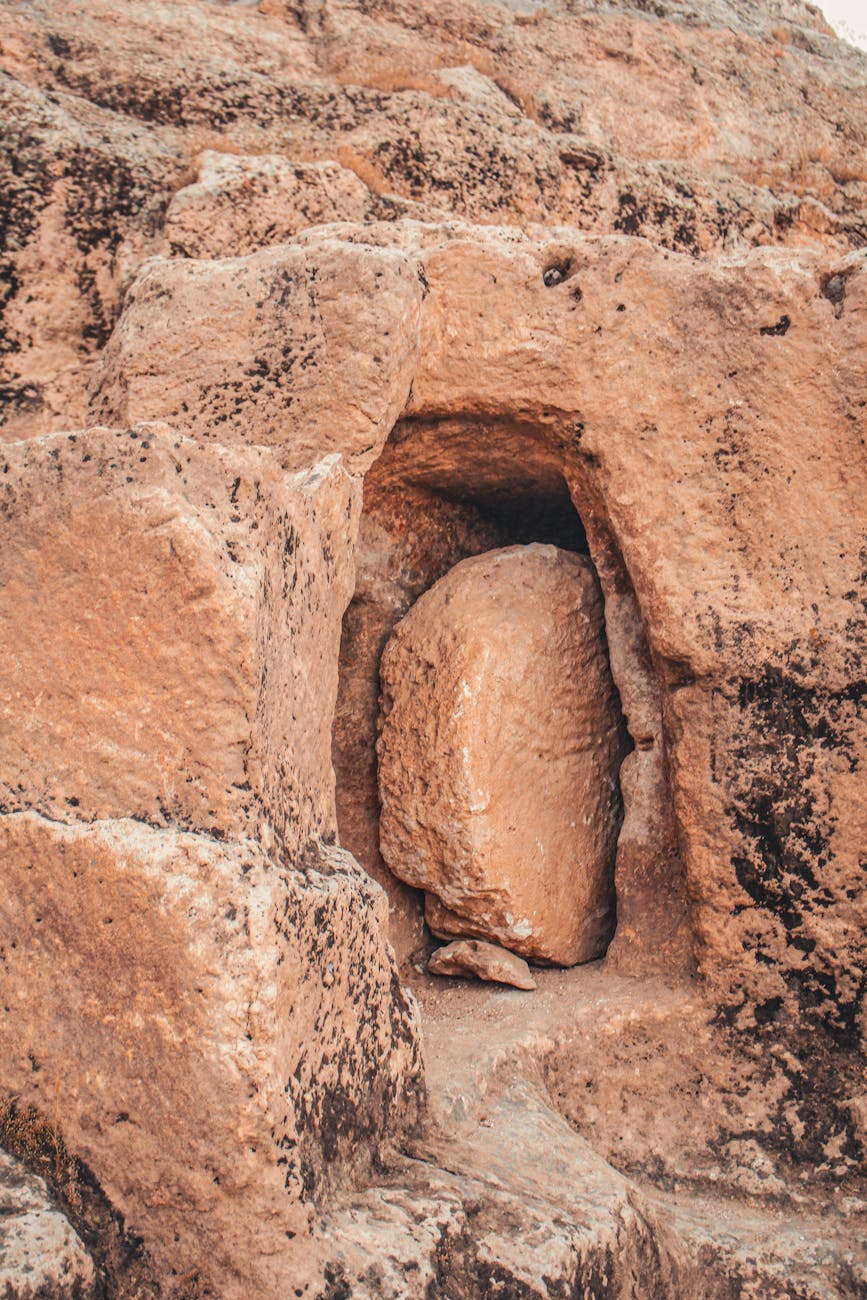
  • Would You Move the Stone?

    In John 11, we see that Jesus raised Lazarus from the dead. But before doing so, He instructed others to remove the stone from the tomb’s entrance. Could Jesus not have removed the stone Himself? Of course, He could have. However, He commanded that the stone be removed. This raises the question: what would have happened if they had not removed the stone? Would Lazarus still have been raised? We do not know, but one thing is clear: Jesus expected them to move the stone!

    Perhaps there is a lesson here about God’s expectation that we do what we can, while He takes care of what we cannot? 

    There is much debate in religious circles about water baptism. Many discussions arise concerning what the Bible teaches on who should be baptized, the method, its theological significance, and whether it is essential for salvation. However, let me pose this question: Did Jesus command baptism? Yes, He did (See Matt. 28:18-20; Mk. 16:15-16; Jn. 3:3-5). Therefore, if Jesus commanded it, why aren’t we obeying (Lk. 6:46; Acts 22:16)? 

    Going back to the story of Lazarus, could Jesus have removed the stone from the tomb Himself? Absolutely. But again, it is important to note that Jesus expected them to act by moving the stone.

    38 Then Jesus, again groaning in Himself, came to the tomb. It was a cave, and a stone lay against it. 

    39 Jesus said, “Take away the stone.” Martha, the sister of him who was dead, said to Him, “Lord, by this time there is a stench, for he has been dead four days.”

    40 Jesus said to her, “Did I not say to you that if you would believe you would see the glory of God?” 

    41 Then they took away the stone from the place where the dead man was lying. And Jesus lifted up His eyes and said, “Father, I thank You that You have heard Me.

    42 And I know that You always hear Me, but because of the people who are standing by I said this, that they may believe that You sent Me.”  

    43 Now when He had said these things, He cried with a loud voice, “Lazarus, come forth!”  

    44 And he who had died came out bound hand and foot with graveclothes, and his face was wrapped with a cloth. Jesus said to them, “Loose him, and let him go.”

    ~ John 11:38-44, New King James Version

    The question is not whether God has the power to save, but whether we are willing to respond to what He has said. For more study, see What Must One Do to Become a Christian? and How Does One Get into Christ?. You can also begin with Looking for Jesus?.

  • Grace, Mercy, and Peace

    The phrase “grace, mercy, and peace to you from God the Father and our Lord Jesus Christ,” or slight variations of it, appears as a standard Apostolic greeting in several books of the New Testament (1 Tim. 1:2; 2 Tim. 1:2; 2 Jn. 1:3). While some scholars suggest that these salutations blend Greek greetings with the Hebrew concept of “Shalom,” it is worth examining the meanings of these words, because such expressions are not merely salutations in letters; they are WORDS OF INSPIRATION from the apostles themselves, to Christians. If words have meaning—and they do—it is worthwhile to consider the significance behind these expressions. 

    Grace

    For instance, the word “grace” means favor. No one can earn God’s favor through meritorious works. However, many passages teach us that the favor extended by God is indeed conditional (Jn. 3:16; Eph. 2:8-9). One must accept Jesus as both Savior and Lord, and only then may one have favor extended by God through the blood of Jesus Christ (Rom. 6:23; Acts 4:12). That said, this favor is, indeed, a gift from God!! Paul wrote to Titus, “But when the kindness and love of God our Savior toward man appeared, not by works of righteousness which we have done, but according to His mercy He saved us through the washing of regeneration and renewing of the Holy Spirit, whom He poured out on us abundantly through Jesus Christ our Savior, that having been justified by His grace we should become heirs according to the hope of eternal life” (Titus 3:4-7 New King James Version). Receiving that letter from the inspired apostle would be very encouraging, especially since the grace (favor) Paul speaks of comes from God the Father and the Lord Jesus Christ, our Savior Himself (v. 1:4)! So then, these are not merely words on a page; they are intentions & extensions of goodwill, expressed by the Holy Spirit.

    Mercy 

    It has been said that grace IS RECEIVING that which one does NOT DESERVE, while mercy equates to NOT RECIEVING what one DOES DESERVE! The Bible clearly teaches that all have sinned and fall short of the glory of God, and that the wages of sin are death. Yet, many passages in the New Testament also illustrate God’s overwhelming compassion and welcome for a repentant person, such as the parable of the prodigal son (Lk. 15:11-32). This powerful message of concern is reinforced in numerous passages! Paul spoke of how we were spiritually dead already, “But God, who is rich in mercy, because of His great love with which He loved us, even when we were dead in trespasses, made us alive together with Christ (by grace you have been saved), and raised us up together, and made us sit together in the heavenly places in Christ Jesus, that in the ages to come He might show the exceeding riches of His grace in His kindness toward us in Christ Jesus” (Ephesians 2:4-7). Through Jesus, we continue receiving that which we do not deserve (God’s favor), while not receiving what we actually do deserve (the wrath of God)!! Let us not dismiss such lofty thoughts through a mere exercising of linguistics (Eph. 1:2).

    Peace

    The thought of peace will not hold such significance if we do not recognize the turmoil that comes with its absence. Looking at the world, we see it torn apart by heartache, filled with the devastations of war, and the tragic losses of human life. People are often distraught, experiencing emotional upheaval and deep heartbreak as evil continually brings chaos into this sin-cursed world. When reflecting on these realities, we may also consider the impact that our own sins have, upon our own souls. With a tender conscience, upon hearing the gospel, you’ll thus understand the turmoil in your heart over your contributions to evil. There should be heartache because of the sins that have seperated us from God. But thanks be to God, that while we were once enemies, Christians have been reconciled to our Creator through the blood of Jesus (Rom. 5:6-9). Christians must ever acknowledge our desperate need for a Savior! And the peace we now enjoy is because of the spiritual restoration brought through God’s mercy AND grace! We long to share that message of reconcilliation with others so that they, too, can find peace with the Father. Only by realizing how shallow and empty life is without Christ, can we appreciate the true beauty of the peace that Jesus offers. “For if, when we were enemies, we were reconciled to God through the death of His Son, much more, having been reconciled, we shall be saved by His life. And not only that, but we also rejoice in God through our Lord Jesus Christ, through whom we have now received reconciliation.” (Rom. 5:10-11)

    More Than a Salutation

    The terms “grace,” “mercy,” and “peace” appear frequently throughout the New Testament epistles. These may have (indeed) been standard greetings at the time they were written, but speaking as the Bible reads is a noble endeavor… And if words hold any meaning—which they certainly do—then we should recognize that these terms carry deep theological significance. Let us strive to appreciate the sentiments expressed in these words more fully. And may the fact that the apostles extend grace, mercy, and peace, “from God the Father and our Lord Jesus Christ,” prompt careful consideration on our part.

  • Passages Concerning Water Baptism into Christ

    INTRODUCTION

    I. I wonder if many people believe that only a few passages in the NT deal with the significance of water baptism. 

    II. With this lesson, I want to impress upon our minds the necessity of baptism within God’s conditions for salvation (the forgiveness of sins). 

    III. All who are of sound mind & age of accountability must hear/believe/repent/confess/be baptized/live faithfully to obtain the mercy, grace, and peace found only in Jesus Christ. 

    IV. As Christians, it would be helpful to see how often water baptism is mentioned in the NT and have a list at our disposal to refer to once in a while. 

    V. The following is a list compiled many years ago, which I have referred to many times in the work of preaching. I would like to make it available to you. If there are any that I have left off or that I have misjudged as needing to be included, please let me know!

    VI. John’s baptism was for the remission of sins, but he was looking forward to Jesus’s coming as the Messiah. The baptism that Jesus commanded (E.g., Jn. 3; Matt. 28; Mk. 16; etc.) requires belief in Him as the resurrected Christ. 

    BODY

    1. Baptism is an initial condition of discipleship (Mt. 28:18-20).
    2. Jesus said those who believe & are baptized will be saved (Mk. 16:15-16). 
    3. The necessity of repentance & remission (forgiveness) of sins is to be preached in Jesus’ name, and that message was to be proclaimed, beginning at Jerusalem (Lk. 24:46-47).
    4. Unless one is born of the water & the Spirit, he cannot enter the kingdom of God (Jn. 3:3-5). 
    5. Believers were commanded to repent & be baptized for the remission (forgiveness) of sins, beginning at Jerusalem (Acts 2:36-39). 
    6. Men and women were baptized upon hearing preaching concerning the kingdom of God and the authority/Lordship of Jesus Christ (Acts 8:12). 
    7. Starting with Isa. 53, Philip guided the Ethiopian eunuch, preaching Jesus to him. Because of his strong belief in the message, the man of Ethiopia was eager to be baptized (Acts 8:36-39)!
    8. After persecuting and seeing the resurrected Jesus, Saul of Tarsus neither ate nor drank for three days. When Ananias instructed Saul, he arose and was baptized, before receiving food (Acts 9:18-20).
    9. Peter commanded Cornelius, along with Cornelius’ relatives and close friends to be baptized by the authority of the Lord (Acts 10:48). Peter told him what he must do (10:6); words by which he and all his household would be saved (11: 14). 
    10. Lydia heard the things spoken by Paul, her heart was opened, thus she and her household were baptized (Acts 16:13-15).
    11. The Philippian jailer and his family had the word of the Lord spoken to them, they believed on the Lord Jesus Christ, were baptized, and thus saved (Acts 16:30-33).
    12. When Paul was in Corinth, many who heard him believed and were baptized (Acts 18:8; Cf. 1 Cor. 1). 
    13. Upon believing in Jesus as the resurrected Lord, the Ephesians Paul encountered were baptized in His name (Acts 19:3-5). 
    14. While addressing the mob in Jerusalem (after his 3rd preaching journey), Paul said that Ananias taught him how to call upon the name of the Lord – through washing away sins in the act of baptism (Acts 22:14-16)!
    15. Recounting his conversion and efforts of preaching to King Agrippa, Paul emphasized repentance, turning to God, and doing works that were befitting repentance (Acts 26:19-20; Cf. Lk.24:26-47; Acts 2:36-38).
    16. In teaching the saints of Rome not to continue in sin, Paul pointed to their burial with Christ in the waters of baptism, emphasizing a lifestyle necessary for obtaining eternal life (Rom. 6:1-4).
    17. Paul taught the Corinthians that baptism should be performed in Jesus’ name (1 Cor. 1:12-13). 
    18. Harkening back to their conversion, Paul told the Corinthians that they were washed, sanctified, justified in the name of the Lord Jesus and by the Spirit of God (1 Cor. 6:9-11; Cf. Acts 22:16)
    19. To not be jealous of another’s spiritual gift(s), Paul told the Corinthians they were all baptized into one body (1 Cor. 12:13).
    20. One is baptized for spiritual renewal in view/anticipation of their eventual resurrection from the dead (1 Cor. 15:29-31).
    21. The salvation offered to mankind, in/through Jesus Christ, fulfills the spiritual seed promise made unto Abraham (Gal. 3:26-29). 
    22. Given the great blessings afforded in Christ, Paul taught the Ephesians to walk worthy of the calling with which they were called, endeavoring to keep the unity of the Spirit in the bond of peace, mindful of the one Lord, faith, baptism, etc. (Eph. 4:4-6). 
    23. Again, to the Ephesians, Paul said the giving of Christ for the church was so that He might sanctify and cleanse her with the washing of the water by the word, that He might present her to Himself a glorious church, without blemish (Eph. 5:25-27). This hearkens back to baptism (for the remission of sins/being added to the Lord’s body, Cf. Acts 2)!
    24. Warning the Colossian brethren against falsehood, Paul said they had everything they needed in Christ. And to emphasize his point, he spoke of baptism as a working of God (Col. 2:11-12)!
    25. Those who say that preaching baptism is not a necessity for salvation really have their work cut out for them in explaining away so many plain statements made in Scripture (Tit. 3:4-7). 
    26. Speaking of plain statements in the Bible, the apostle Peter wrote that of that which now saves us – baptism, the answer of a good conscience toward God, through the resurrection of Jesus, in Whom has been granted all authority (1 Pet. 3:21-22). 
    27. Finally, let us observe that the same Hebrews who were challenged to grow in their knowledge of spiritual matters (Cf. Heb. 6:2) were not to forget the commitment they made when becoming disciples of Jesus (Heb. 10:19-23). 

    CONCLUSION

    1. The NT contains many passages concerning water baptism. I hope this list can help you establish, confirm, or reaffirm your faith. 
    2. Moreover, I pray that this lesson and list of passages will help equip you with the conviction necessary to speak to others on the importance of this matter. Use this list as you see fit. 
    3. As we end things for now, what must one do to become a Christian? 
    4. Jesus taught obedience (Mt. 7:21-23; 28:20; Lk. 6:46). He also taught that unless we believe in Him, we will die in our sins (Jn. 10:31-39). He taught repentance (Lk. 13:3; 24:46-47), confessing Him before others (Mt. 10:32-33), and baptism as a necessity (Mt. 28:19-20; Mk. 16:15-16; Jn. 3:5). 
    5. He teaches faithfulness unto death (Rev. 2:10).    

    For a shorter overview of the Bible’s teaching on becoming a Christian, see What Must One Do to Become a Christian? You can also study How Does One Get into Christ?, or begin with Looking for Jesus?

  • The Philippian Jailer & Faith Only

    Those who promote the doctrine of salvation by faith only often point to the story of the Philippian Jailer as evidence that all sinners need to do to be saved is to believe. But does not the Bible also teach that sinners must repent (Lk. 13:1-5)? The doctrine of faith only would exclude repentance as a condition of forgiveness, since faith is not repentance. Does not the Bible also teach that sinners must confess their faith in Christ (Matt. 10:32-33; Rom. 10:9-10)? The doctrine of salvation by faith alone would exclude confession as a condition of salvation since faith is not confession. One may believe in Christ yet be unwilling to confess Him (Jn. 12:42-43). The Bible also teaches that baptism is for the remission of sins (Acts 2:38), but the doctrine of salvation by faith only excludes baptism as a condition of salvation. The doctrine of salvation by faith only would thus exclude repentance, confession, and baptism as conditions of salvation, which contradicts the teachings of the Bible. Therefore, salvation requires not only belief in Christ but also active faith, repentance, confession, and baptism into Christ for the remission of sins (Matt. 28:18-20; Mk. 16:15-16; Lk. 24:46-47; Acts 2:36-39).

    25 But at midnight Paul and Silas were praying and singing hymns to God, and the prisoners were listening to them. 

    26 Suddenly there was a great earthquake, so that the foundations of the prison were shaken; and immediately all the doors were opened and everyone’s chains were loosed.

    27 And the keeper of the prison, awaking from sleep and seeing the prison doors open, supposing the prisoners had fled, drew his sword and was about to kill himself. 

    28 But Paul called with a loud voice, saying, “Do yourself no harm, for we are all here.”

    29 Then he called for a light, ran in, and fell down trembling before Paul and Silas. 

    30 And he brought them out and said, “Sirs, what must I do to be saved?”

    31 So they said, “Believe on the Lord Jesus Christ, and you will be saved, you and your household.” 

    32 Then they spoke the word of the Lord to him and to all who were in his house. 

    33 And he took them the same hour of the night and washed their stripes. And immediately he and all his family were baptized. 

    34 Now when he had brought them into his house, he set food before them; and he rejoiced, having believed in God with all his household.

    ~ Acts 16:25-34

    24 You see then that a man is justified by works, and not by faith only.

    25 Likewise, was not Rahab the harlot also justified by works when she received the messengers and sent them out another way?

    26 For as the body without the spirit is dead, so faith without works is dead also.

    ~ James 2:24-26

    The jailer’s question—“What must I do to be saved?”—is worth following through the rest of the New Testament. For additional passages, read What Must One Do to Become a Christian? and Passages Concerning Water Baptism into Christ. If you are beginning your study of Jesus and salvation, start with Looking for Jesus?

  • How Does One Get into Christ?

    Many people search hopelessly for circumstances to conclude, somehow, that baptism in water is not essential to salvation. They will even distort plain passages in their efforts to find support for their teaching. However, the Bible teaches that baptism in water is necessary for the remission of sins for the penitent believer (Acts 2:37-38). Although these passages are very clear and easy to understand, many contend that baptism has nothing to do with one’s salvation. How can anyone honestly say that baptism is not a requirement in God’s plan for man’s redemption? Must one be IN CHRIST to be saved? Yes, all agree!! How does one get into Christ? On this, not everyone agrees!! If one is baptized into Christ, can one get into Christ in any other way? If one is in Christ by faith only and without baptism, into what is he baptized? How can one be baptized into Christ when he is already in Christ? 

    15 And He said to them, “Go into all the world and preach the gospel to every creature.

    16 He who believes and is baptized will be saved; but he who does not believe will be condemned.”

    ~ Mark 16:15-16

    3 Or do you not know that as many of us as were baptized into Christ Jesus were baptized into His death? 

    4 Therefore we were buried with Him through baptism into death, that just as Christ was raised from the dead by the glory of the Father, even so we also should walk in newness of life.

    ~ Romans 6:3-4

    26 For you are all sons of God through faith in Christ Jesus. 

    27 For as many of you as were baptized into Christ have put on Christ.

    ~ Galatians 3:26-27

    21 There is also an antitype which now saves us—baptism (not the removal of the filth of the flesh, but the answer of a good conscience toward God), through the resurrection of Jesus Christ,  

    22 who has gone into heaven and is at the right hand of God, angels and authorities and powers having been made subject to Him.

    ~ 1 Peter 3:21-22

    Holy Father in heaven: Jesus was crucified by lawless hands but was raised from the dead! He has been given all authority in heaven and on earth. Before ascending into heaven, He commanded His Apostles to bear witness of His resurrection and to preach in His name. They went therefore, and preached the good news of salvation through Him, making disciples of all the nations, baptizing them by Your authority. Moreover, they taught disciples to observe all things commanded them (Matt. 28:18-20; Mk. 16:15-16; Lk. 24:46-47). May those who have honest hearts be likewise taught THE FULL TRUTH OF YOUR WORD, and may You bless us with opportunities to fulfill these blessed commands in our lives. Moreover, when we have done all that has been commanded us, may we consider ourselves to be unprofitable servants (Lk. 17:10). Lead us back to Your word, O God. Amen.   

    If you are studying this question for yourself, you may also want to read What Must One Do to Become a Christian? and Passages Concerning Water Baptism into Christ. If you are simply looking for a place to begin with Jesus and salvation, visit Looking for Jesus?

  • The Promise is to You, Your Children, and to All

    After Jesus ascended to heaven, the Holy Spirit came upon His Apostles, and on the Day of Pentecost, they bore witness of Him. Peter addressed the crowd and explained that the miracles performed that day, such as the Apostles speaking different known languages, fulfilled prophecy (Cf. Joel 2:28-32; Acts 2:17-21). He also referenced the miracles of Jesus that the people could remember. Peter informed them that their great ancestor David had predicted that the Christ would die, be buried, resurrected, and become Ruler over His enemies. Peter did not hold back from telling his audience what they needed to hear, as they were guilty of putting to death the Lord’s Christ (Acts 2:22-36). Many of their consciences were pricked, and they wanted to know what to do! 

    Note some things Peter did not say: Peter did not tell them they had already believed and, therefore, were already saved. Nor did he command them to simply confess with their mouth that Jesus is Lord, nor to say a sinner’s prayer, nor to merely accept Jesus into their hearts. 

    Instead, Peter told them (since they had believed) to repent and be baptized in the name of Jesus Christ for the remission of sins, and they would receive the gift of the Holy Spirit. Those who gladly received his word that day were baptized and saved by the Lord Himself! If you found out that you are guilty of sin, would you ask, “What should I do?” If the Apostle Peter were present, what would he say? And how would you respond?

    36 “Therefore let all the house of Israel know assuredly that God has made this Jesus, whom you crucified, both Lord and Christ.”

    37 Now when they heard this, they were cut to the heart, and said to Peter and the rest of the apostles, “Men and brethren, what shall we do?”

    38 Then Peter said to them, “Repent, and let every one of you be baptized in the name of Jesus Christ for the remission of sins; and you shall receive the gift of the Holy Spirit. 

    39 For the promise is to you and to your children, and to all who are afar off, as many as the Lord our God will call.”

    40 And with many other words he testified and exhorted them, saying, “Be saved from this perverse generation.” 

    41 Then those who gladly received his word were baptized; and that day about three thousand souls were added to them. 

    ~ Acts 2:36-41

    Holy God in Heaven: Thank You for Your plan to send Your Son to this world, to give His life for my sins. I am grateful for His willingness to execute this plan, and for the Holy Spirit revealing it through the teaching of the Apostles. Thank You for the written word, including the first sermon preached in Jerusalem, as recorded in Acts chapter 2. I also appreciate the eyewitness testimony of Jesus and His miracles, as well as the fulfilled prophecies that were written hundreds of years prior. Most importantly, I am thankful for the faith that has been instilled in my heart through these inspired pages. I believe in Jesus with all my heart as the Christ, Master, and One who stands ready to both judge and forgive. I humbly ask You to endow me with the gift of the Holy Spirit, and may I be an active member of your spiritual kingdom, glorifying You in all things. Thank You for Your love and mercy. Amen!

  • Whoever Believes in Him Should Not Perish

    John 3:16 is one of the most frequently quoted passages of the Bible. Many suppose that by simply believing in Jesus as the sacrificial Savior, one can inherit eternal life. However, it’s important to note that Jesus said whoever believes in him SHOULD NOT PERISH but have everlasting life. Even the demons believe in Jesus and tremble (James 2:19). Moreover, we must not ignore the context of this passage. Earlier in the same chapter, Jesus told Nicodemus that unless one is born again, they cannot see the kingdom of God (John 3:3). He further stated that unless one is born of water and the Spirit, they cannot enter the kingdom of God (John 3:5). And after speaking the words of verse 16, Jesus commends “he who does the truth” while coming to the light “that his deeds may be clearly seen.” Even believing in Jesus is “the work” of God (John 6:29), and Jesus would later commission His apostles to teach others “to observe all things” He commanded (Matthew 28:18-20). Therefore, we should come to Jesus, not only believing in Him as our necessary Savior, but also accepting Him as the Lord and Master of our life!

    16 For God so loved the world that He gave His only begotten Son, that whoever believes in Him should not perish but have everlasting life. 

    17 For God did not send His Son into the world to condemn the world, but that the world through Him might be saved.

    18 He who believes in Him is not condemned; but he who does not believe is condemned already, because he has not believed in the name of the only begotten Son of God. 

    19 And this is the condemnation, that the light has come into the world, and men loved darkness rather than light, because their deeds were evil. 

    20 For everyone practicing evil hates the light and does not come to the light, lest his deeds should be exposed. 

    21 But he who does the truth comes to the light, that his deeds may be clearly seen, that they have been done in God.

    ~ John 3:16-21

    My prayer, Jehovah hear. I am striving to follow Your will, Lord, and I humbly ask You to guide me in putting to death my old self and accepting Your will for my rebirth (Romans 6:3-6; Acts 8:22-24). Just like the apostle Paul, who died daily (1 Corinthians 15:31), I promise to continue putting to death my earthly desires and passions (Galatians 2:20). Please help me to fully understand the spiritual realities and forces that exist in the unseen, just like Nicodemus! I commit to making You the Master of my life, and I come to You with an open heart. Please protect and lead me in all your ways. It is in Jesus I pray, amen. 

  • But Noah Found Grace

    The temptations, trials, and wickedness of this world can sometimes seem overwhelming. When we observe the behavior of our fellow man, it can even be daunting to think about keeping our families pure. But there was a time in which the WHOLE EARTH was given over to continually thinking evil. And in THAT TIME, Noah found grace in the eyes of the LORD. What a wonderful TESTIMONY OF GOD’S FAITHFULNESS! He acknowledged one righteous man’s heart through the thick of all that evil. Moreover, God warned Noah of an impending judgment upon the wicked and gave him instructions on how to prepare for the Flood. Moved with godly fear (Hebrews 11:7), Noah responded by heeding all of God’s instructions (Genesis 6:22). Thus, Noah and his family were saved through God’s saving grace (1 Peter 3:20)!

    5 Then the Lord saw that the wickedness of man was great in the earth, and that every intent of the thoughts of his heart was only evil continually. 

    6 And the Lord was sorry that He had made man on the earth, and He was grieved in His heart.

    7 So the Lord said, “I will destroy man whom I have created from the face of the earth, both man and beast, creeping thing and birds of the air, for I am sorry that I have made them.” 

    8 But Noah found grace in the eyes of the LORD.

    ~ Genesis 6:5-8

    Holy God. There are times that I observe what’s going on in this world, and I get really distressed. The news media constantly informs me of the evils surrounding us. Ongoing wars, murders, oppressions, and tragedies abound. And we are constantly bombarded with fears of what can potentially come next! But no matter how fallen this world is presently, I pray that You will enable me and my family to have a similar faith as Noah and his household. Thank You for the comforts, and even the warnings, revealed in Your Scripture. Thank You for paving the way for me to prepare for the Judgement that You are bringing upon the wicked (2 Peter 3:1-18). I pray that Your grace will be extended to us. Please save me and my family from this world full of evil. I want us to live with You throughout eternity. May we always be thankful, and conduct ourselves appropriately in response to Your grace. Amen.    

    Noah’s account reminds us that grace does not make faithful obedience unnecessary. For more study about grace, faith, and responding to God, visit Looking for Jesus? and What Must One Do to Become a Christian?.

  • The Fall of Man & Hope for Redemption

    The promise in Genesis 3:15 is very important as it shows the beginning of God’s plan of redemption. Appearing to refer to the enmity between humans and serpents, its deeper meaning is the conflict between the seed of woman, who is Christ, and Satan. Through His death, Jesus Christ defeated the power of Satan (Hebrews 2:14-15). Though the forces of evil killed Jesus, it was in accordance with God’s plan and foresight. Death was temporary as Christ rose from the dead (1 Corinthians 15:3-4). On the day Eve sinned, Satan appeared victorious. However, the promise was that a descendant of Eve would one day triumph over Satan, a battle Eve had lost that day.

    9 Then the Lord God called to Adam and said to him, “Where are you?” 

    10 So he said, “I heard Your voice in the garden, and I was afraid because I was naked; and I hid myself.”

    11 And He said, “Who told you that you were naked? Have you eaten from the tree of which I commanded you that you should not eat?”

    12 Then the man said, “The woman whom You gave to be with me, she gave me of the tree, and I ate.”

    13 And the Lord God said to the woman, “What is this you have done?” The woman said, “The serpent deceived me, and I ate.”

    14 So the Lord God said to the serpent: “Because you have done this, you are cursed more than all cattle, and more than every beast of the field; On your belly you shall go, and you shall eat dust all the days of your life.

    15 And I will put enmity between you and the woman, and between your seed and her Seed; He shall bruise your head, and you shall bruise His heel.”

    ~ Genesis 3:9-15

    O God in heaven. I have disgraced myself due to the sins I have committed against You. There is no place where I can hide from You, as You know everything. I am confessing my wrongdoings and asking for Your mercy and grace. I am grateful for the people You have placed in my life and appreciate their companionship. That said, I want to be a good leader for my family and aim to do what is right despite my past mistakes. I am grateful that You’ve revealed Satan as a real threat to my fellowship with You; and that Your wisdom and foresight provide us with a chance for true redemption through Your Son. I pray that I may always be thankful for Jesus and look up to You with a grateful heart. Help me to see Christ more clearly in the prophecies of Scripture. And I pray that others will see Jesus in the way that I devote my life to You. Amen.

    The hope first promised after humanity’s fall ultimately leads us to Jesus Christ. If you are studying that hope for yourself, continue with Looking for Jesus? and What Must One Do to Become a Christian?.