Some people do their good deeds to be seen by others, so that they may gain notoriety from men. They have their reward (Matthew 6:1-2, 5, 7, 16).
But then, there are those who have the word of God sown in their hearts. The seed therefore germinates, buds forth, and blossoms out into something so beautiful that others cannot help but notice!
13 You are the salt of the earth; but if the salt loses its flavor, how shall it be seasoned? It is then good for nothing but to be thrown out and trampled underfoot by men.
14 You are the light of the world. A city that is set on a hill cannot be hidden.
15 Nor do they light a lamp and put it under a basket, but on a lampstand, and it gives light to all who are in the house.
16 Let your light so shine before men, that they may see your good works and glorify your Father in heaven.
In Jesus’ time, the Sadducees were part of a distinct class system within Judea, aligned with beliefs that often led to conflict with the Pharisees. The Sadducees were known for rejecting faith in the resurrection and the existence of angels (Acts 23:8). When they tested Jesus about the resurrection, Jesus did not accept their ignorance. Instead, He rebuked them for “not knowing the Scriptures nor the power of God” (Matt. 22:23-33; Mk. 12:18-27; Lk. 20:27-40). Likewise, there are some today who are missing the mark on vital aspects of truth. May we reflect on various points that can and should be affirmed (even those espoused by counterparts)?
Nowhere in the Bible did Jesus rebuke anyone for striving to faithfully keep all of God’s Law to the best of their ability. Some equated their man-made traditions with God’s word and, as a result, cast aside the true meanings of various passages of Scripture (Mk 7:1-13). Many also had hypocritical and hypercritical attitudes (Matt. 7:1-5; Mk. 7:10-24; Lk. 18:9-14), and Jesus was swift to condemn such sinful attitudes. But the Lord expects much from His followers, and while good intentions are necessary, so is the truth (Jn. 17:17, 20-21). If we constantly hear warnings against one extreme without any against the other, I encourage you to pray, reflect, and exercise discernment.
9 And this I pray, that your love may abound still more and more in knowledge and all discernment,
10 that you may approve the things that are excellent, that you may be sincere and without offense till the day of Christ,
11 being filled with the fruits of righteousness which are by Jesus Christ, to the glory and praise of God.
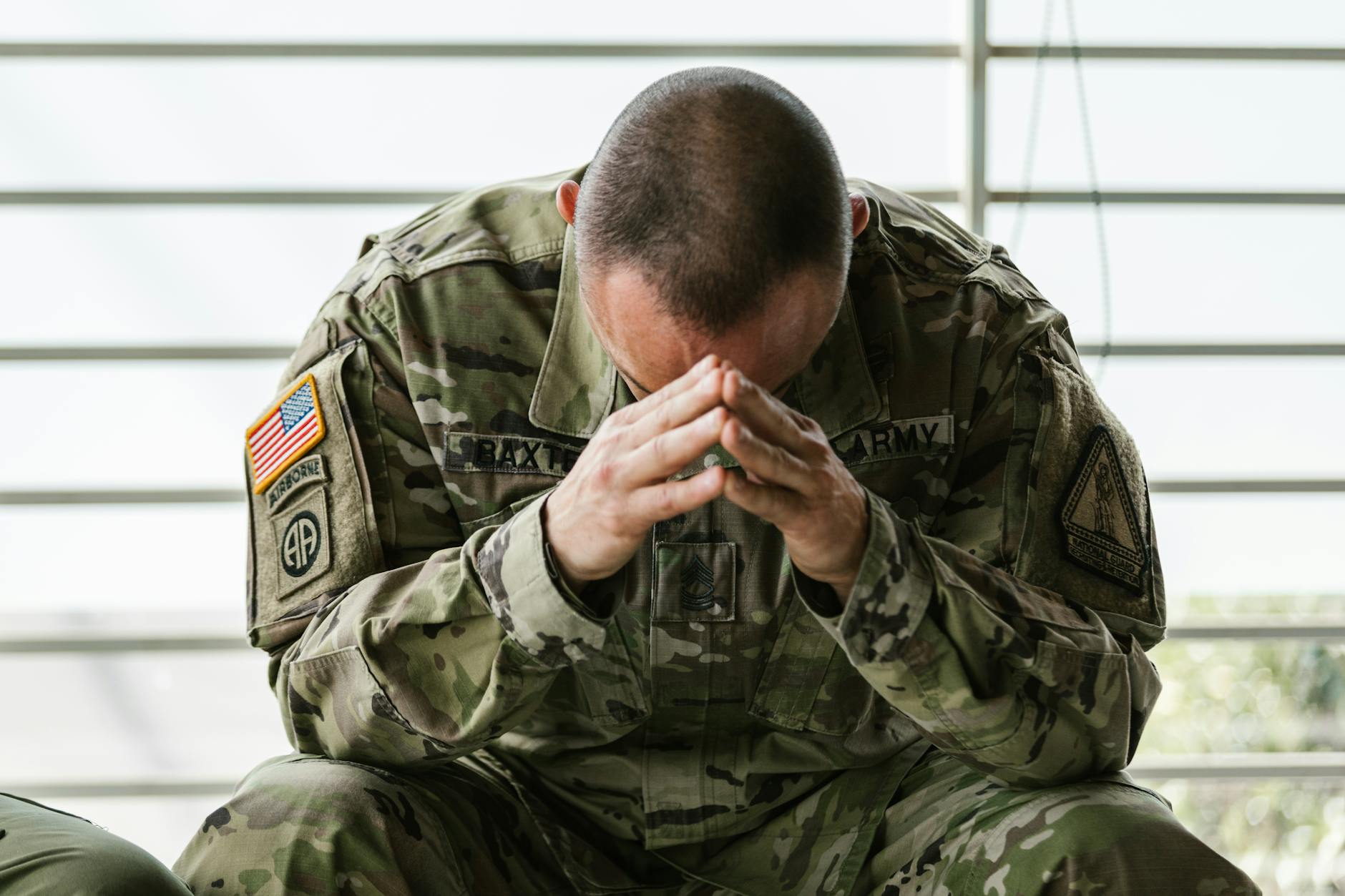
My fellow Americans, neighbors, and loved ones: Many are posting tributes on social media today to honor those who have lost their lives while serving their fellow man. I am very grateful to live in this country and for the freedoms that it provides. Moreover, I am thankful for my fellow citizens’ sacrifices so that I can enjoy the comforts of living in this land. I truly am proud to be an American. That said, while we remember those who made the ultimate sacrifice for others, I would like to take this opportunity to encourage you to consider something even more critical. Many fathers and mothers have sent their sons and daughters to die on the battlefield, but God sent his only begotten Son to die for the sins of humanity (John 3:16). Though I do not wish to diminish many Americans’ heavy sacrifices, I want to draw our attention to Jesus. Would you join me in praying to God after reading this reflection? Consider a few comparisons.
Sacrifice for Others: Today, we seek to remember the soldiers who gave their lives to protect freedom, peace, and country. With much greater consequence, Jesus gave his life to save humanity from sin and death, offering the gift of eternal life! Christ told His disciples, “Greater love has no one than this, than to lay down one’s life for his friends. You are My friends if you do whatever I command you.” (John 15:13-14)
Freedom Through Death: On Memorial Day, we reflect on how the sacrifice of so many soldiers secured our earthly freedoms, such as religious liberty and safety. In contrast, Jesus’ death offers us spiritual freedom—freedom from the bondage of sin, from separation from God, and the ultimate fate of condemnation. “Stand fast therefore in the liberty by which Christ has made us free, and do not be entangled again with a yoke of bondage.” (Galatians 5:1)
Remembering the Fallen: We honor and remember those who died on Memorial Day, ensuring their sacrifices are not forgotten. Christians also remember Jesus’ death regularly through practices like communion so that His sacrifice remains in our hearts and minds. Jesus instituted His memorial on the night in which he was betrayed, and 1st-century Christians observed that memorial every first day of the week (Matthew 26:26-30; Acts 20:7; 1 Corinthians 11:23-33).
Inspiration to Live Better: Contemplating the sacrifices of soldiers may inspire us to live with gratitude, courage, and a commitment to service. In a much more profound sense, remembering Jesus’ sacrifice calls Christians to live sacrificially, loving and serving others with a higher sense of purpose and calling. “By this we know love, because He laid down His life for us. And we also ought to lay down our lives for the brethren. But whoever has this world’s goods, and sees his brother in need, and shuts up his heart from him, how does the love of God abide in him?” (1 John 3:16-17)
Hope Beyond Death: Many believe the sacrifices of soldiers contribute to a brighter, more hopeful future for our nation. However, Jesus’ death grants us the ultimate hope—eternal life and victory over sin and death, promising that we will reign with Him forever and escape every heartache (Revelation 21:1-22:21).
I must note: While it may be inappropriate to compare secular holidays with Jesus’ death during our time of communion on the 1st day of the week, this Memorial Day, as we reflect on the tragedies of this world and the noble sacrifices made for goodness, it feels fitting to express gratitude. And while it is noble that our fellow man has been willing to die for us, OUR UNDERSTANDING OF TRUE NOBILITY COMES FROM GOD, the creator and sustainer of all things.
If this resonates with you, I pray you will look to Jesus and thank Him for dying for you, providing hope for a better life beyond this world. We will each give an account to God for our deeds, and all of us have sinned! Let us demonstrate our thankfulness by surrendering our lives to Him (Matthew 7:21-23), putting our belief in Jesus as Savior and Lord (John 10:31-39), repenting of our sins (Luke 13:3), confessing our faith (Matthew 10:32-33), and being baptized for the forgiveness of our sins (Mark 16:15-16; Acts 2:38). In doing so, the Lord will add you to His church (Acts 2:47), the one He purchased with His blood (Acts 20:28; Ephesians 5:25-27)!
Just as one day each year is not enough to honor what our fellow man has done for us, a single moment or day is insufficient to commemorate what Jesus has done for me. Let us strive to devote our lives more fully to Him. Amen.
Isaiah chapters fifty-five through fifty-seven contain profound principles. God, through Isaiah, has just foretold the coming of the Suffering Servant, through whose sacrifice Israel will be saved (Isa. 49-54). Thus, Israel is encouraged to seek the LORD (Isa. 55:1-13). By keeping His justice and practicing righteousness, the LORD will bless them (Isa. 56:1). Even the eunuch who feels like “a dry tree” and the foreigners who join themselves to the LORD will be blessed and find mercy (Isa. 56:3-6). The LORD’s patience is remarkable, considering that His people have become “sons of the sorceress, the offspring of the adulterer and the harlot” (Isa. 57:3). They have sinned in various ways, sought other gods, and sent ambassadors everywhere but have not turned to God (Isa. 57:4-13). Nevertheless, the LORD will forgive those with a contrite heart (Isa. 57:14-21)!
Amid this discourse, we learn how irresponsible Israel’s leaders had been. One says, “Come, I will bring wine, and we will fill ourselves with intoxicating drink; tomorrow will be as today, and much more abundant” (Isa. 56:12). It is a tragic folly that many take for granted the opportunities afforded to us today, as if material blessings will continue to increase despite ungodliness. There are no guarantees concerning tomorrow, which should serve as a sober warning. May it also inspire us to accept the LORD’s pardon, His ways, His healing, and His guidance today!
Consider the angels of Heaven, who dwell in the very presence of God Almighty. They often instill fear in men when sent to minister to those who will inherit salvation. Yet, despite their magnificence, they do not rival the wondrous power of the Lord Jesus (Heb. 1:1-14). Our Lord, who took on human form, is not ashamed to call mankind His brethren and died so that we may receive help during temptation and power over death. Thus, we must pay more earnest attention to what we have heard, lest we drift away (Heb. 2:1-18).
The phrase “raise the ante” means to increase the cost or price, which reflects the entire book of Hebrews concerning the Law of Christ compared to the Law of Moses. Sobering lessons can be learned from the faith of Moses and the unfaithful generation that fell in the wilderness (Heb. 3:1-11; Psa. 95:7-11). Believers are warned to beware, lest there be in any of you “an evil heart of unbelief in departing from the living God” (Heb. 3:12). “But exhort one another while it is called ‘Today,’ lest any of you be hardened through the deceitfulness of sin” (Heb. 3:13). We become partakers of Christ if we hold the beginning of our confidence steadfast until the end: “Today, if you will hear His voice, do not harden your hearts as in the rebellion” (Heb. 3:15).
The Hebrew readers were encouraged to heed the lessons from their forefathers who died in the wilderness because they sinned, did not obey, and could not enter the promised rest due to unbelief (Heb. 3:16-19). This message was directed to Jewish Christians who may have been tempted to revert to a form of Judaism out of fear of the persecution that afflicted Christians. It was very appealing for some to return to worshiping Jehovah as prescribed in the Law, which could shield them from suffering. However, this was impossible, as the Law of Christ replaced the Old Covenant.
The spiritual depth in this text is remarkable. It is fascinating to consider how David wrote of “Today” by the Spirit (Psa. 95:7; Heb. 3:7; 4:7) and how God spoke of “His rest” during David’s lifetime, foreshadowing the work of Christ. Additionally, the Hebrew writer reveals that Joshua did not provide the final rest for the people. Therefore, a Sabbath of rest remains for the people of God! Let us strive (TODAY) to enter that rest (Heb. 4:1-16)!
God presents many valuable lessons to learn from the past. He also teaches us the value of preparing for the future. A future in heaven, yes, but also preparing for the various stages of life on this earth. But what of the present? What about for “today?” What can we take care of “today” in these moments set before us?
Here We Are, Servants Today
In Nehemiah chapters nine and ten, the generation that returned from captivity held a great assembly. On the 24th day of the month, many expressed great remorse for their sins and the iniquities of their fathers (Neh. 9:1-2). While standing in their place, the Book of the Law was read for a fourth of the day, and another fourth, they worshiped the LORD their God (Neh. 9:3-4). Moreover, leaders among them cried out with a loud voice to God. The Levites also commanded the assembly to stand up and bless the LORD. That is when the children of Israel were reminded of their spiritual history: of blessings, opportunities, abilities, responsibilities, failures, and God’s faithfulness (Neh. 9:5-35). The people renewed their Covenant with the LORD (Neh. 9:36-10:39), declaring, “Here we are, servants today! And the land you gave to our father, to eat its fruit and its bounty, here we are, servants in it! And it yields much increase to the kings You have set over us, because of our sins; Also, they have dominion over our bodies and our cattle at their pleasure; and we are in great distress. And because of all this, we make a sure covenant and write it; Our leaders, our Levites, and our priests seal it.” (Neh. 9:36-38) Taking the time to approach God with reverence, humility, and mindfulness of our spiritual heritage with Him, along with rededicating ourselves to Him and His terms of the Covenant – we may do just that TODAY! We may also call upon God to take note of our resolve to serve Him TODAY!!
Today, If You Will Hear His Voice
The call to worship God and obey Him is inspiring but also necessitates responsibility and accountability. Psalm ninety-five implores readers to sing to the LORD, shout joyfully to the Rock of salvation, and come before His presence with thanksgiving! There are excellent reminders of God creating the hills, the sea, dry land, and mankind (Psa. 95:1-5). There is even an extolling of God’s special relationship with His people (Psa. 95:7). But His people were also warned to learn from their spiritual forefathers. “Oh come, let us worship and bow down; Let us kneel before the LORD our Maker. For He is our God, and we are the people of His pasture, and the sheep of His hand. Today, if you will hear His voice: Do not harden your hearts, as in the rebellion, as in the day of trial in the wilderness, When your fathers tested Me; They tried Me, though they saw My work.” (Psa. 95:6-9) The warning continues by telling how God grieved the generation that wandered in the wilderness because they went astray in their hearts. As a result, many of God’s covenant people did not enter His rest (Psa. 95:10-11). So, along with the grand call to worship the Almighty comes a warning against going astray within our hearts. Moreover, “Today, if you will hear His voice: Do not harden your hearts…” We can hear the LORD’s voice TODAY! With blessing and opportunity, accept the responsibility of sober thinking TODAY!!
God presents many valuable lessons to learn from the past. He also teaches us the value of preparing for the future. A future in heaven, yes, but also preparing for the various stages of life on this earth. But what of the present? What about for “today?” What can we take care of “today” in these moments set before us?
When God called Moses to the burning bush and commissioned him to be a leader among the Israelites so that He might rescue them from their Egyptian bondage, God instructed Moses to approach Him in a most holy manner.
5 Then He said, “Do not draw near this place. Take your sandals off your feet, for the place where you stand is holy ground.”
6 Moreover, He said, “I am the God of your father—the God of Abraham, the God of Isaac, and the God of Jacob.” And Moses hid his face, for he was afraid to look upon God.
~ Exodus 3:3-6
This situation is reminiscent of how the Commander of the Lord’s army spoke to Joshua! As the period of invasion and conquest in biblical history began, a celestial being appeared to Joshua to encourage him. During their meeting, the Commander of the Lord’s army instructed Joshua to approach him in a holy manner also.
13 And it came to pass, when Joshua was by Jericho, that he lifted his eyes and looked, and behold, a Man stood opposite him with His sword drawn in His hand. And Joshua went to Him and said to Him, “Are You for us or for our adversaries?”
14 So He said, “No, but as Commander of the army of the Lord I have now come.” And Joshua fell on his face to the earth and worshiped, and said to Him, “What does my Lord say to His servant?”
15 Then the Commander of the Lord’s army said to Joshua, “Take your sandal off your foot, for the place where you stand is holy.” And Joshua did so.
~ Joshua 5:13-15
Notice that the “Commander of the Army of the LORD” appears to Joshua, and in response, Joshua quickly falls on his face and worships this being. Like Moses at the burning bush, Joshua is instructed to take off his sandals (Exod. 3:5-6), and as their conversation continues, the text refers to this Commander as the LORD (Josh. 6:2). This indicates that the Commander of the Army of the LORD is a manifestation of God Himself, as angels do not accept worship from men (Rev. 19:10; 22:9)…
Joshua faced a significant challenge as the people of Israel approached the heavily fortified city of Jericho. He needed to be confident that those on Israel’s side were more powerful than those against them! God fights for His people, and a man with a drawn sword symbolizes His presence with Joshua!! For us today, we are aware that there is a spiritual battle being waged between God and Satan. When a person fights alongside God, victory is guaranteed! The Christian soldier is to be equipped with the armor of God (Eph. 6:10-20), while God’s Son serves as the captain of the Christian army (Heb. 2:10)!! Soldiers of Christ, arise.
Our God, He is Alive (Exod. 3:14)… Dare to stand like Joshua (Josh. 24:15)!
Rising early is a habit that many significant figures throughout history have embraced. Whether it’s to seize the quiet moments of dawn, to embark on essential tasks, or to dedicate time for personal reflection, waking up early sets a powerful tone for the rest of the day. Even the most minor step forward, taken in the early hours, can set the stage for significant progress. Let the examples from historical and biblical figures inspire you:
Genesis 21:14, So Abraham rose early in the morning, and took bread and a skin of water; and putting it on her shoulder, he gave it and the boy to Hagar, and sent her away. Then she departed and wandered in the Wilderness of Beersheba. (Regarding the monumental occasion of Abraham sending away Hagar and Ishmael)
Genesis 22:3, So Abraham rose early in the morning and saddled his donkey, and took two of his young men with him, and Isaac his son; and he split the wood for the burnt offering, and arose and went to the place of which God had told him. (When God tested Abraham’s faith concerning Isaac)
Genesis 28:18, Then Jacob rose early in the morning, and took the stone that he had put at his head, set it up as a pillar, and poured oil on top of it. (After Jacob dreamed of a ladder reaching to heaven, with the angels of God ascending and descending on it)
Exodus 24:4, And Moses wrote all the words of the Lord. And he rose early in the morning, and built an altar at the foot of the mountain, and twelve pillars according to the twelve tribes of Israel. (When the children of Israel affirmed their covenant with the LORD)
Exodus 34:4, So he cut two tablets of stone like the first ones. Then Moses rose early in the morning and went up Mount Sinai, as the Lord had commanded him; and he took in his hand the two tablets of stone. (When Moses made two new tablets and presented himself to God on Mount Sinai)
Joshua 3:1, Then Joshua rose early in the morning; and they set out from Acacia Grove and came to the Jordan, he and all the children of Israel, and lodged there before they crossed over. (As Joshua set out to cross the Jordan River and to invade & conquer the land of Canaan)
Joshua 6:12, And Joshua rose early in the morning, and the priests took up the ark of the Lord. (In preparation for Joshua, the priests, and the men of war to march around the city of Jericho)
Joshua 7:16, So Joshua rose early in the morning and brought Israel by their tribes, and the tribe of Judah was taken. (To investigate/discover where sin was being committed/hidden from within the camp)
Judges 6:38, And it was so. When he rose early the next morning and squeezed the fleece together, he wrung the dew out of the fleece, a bowlful of water. (When Gideon sought assurances from God)
1 Samuel 15:12, So when Samuel rose early in the morning to meet Saul, it was told Samuel, saying, “Saul went to Carmel, and indeed, he set up a monument for himself; and he has gone on around, passed by, and gone down to Gilgal.” (When Samuel confronted Saul for transgressing the LORD’s command)
1 Samuel 17:20, So David rose early in the morning, left the sheep with a keeper, and took the things and went as Jesse had commanded him. And he came to the camp as the army was going out to the fight and shouting for the battle. (The day on which David slew Goliath, the giant Philistine warrior)
2 Chronicles 29:20, Then King Hezekiah rose early, gathered the rulers of the city, and went up to the house of the Lord. (When Hezekiah brought about spiritual reforms in the southern kingdom of Judah)
Mark 1:35, Now in the morning, having risen a long while before daylight, He went out and departed to a solitary place; and there He prayed. (Jesus started the morning in communion with the Father before preaching throughout Galilee and casting out demons)
Some individuals are naturally more inclined to be “morning people” than others. While I don’t intend to insist that everyone should rise earlier, there is value in waking up early, particularly when facing significant responsibilities or tasks. Notably, figures such as Abraham, Moses, Joshua, Samuel, David, Gideon, Hezekiah, and Jesus made the most of the early hours. It’s interesting to observe that these leaders from different times all recognized the benefits of a head start on their days. Regardless of personal preferences and routines, it’s worth considering the advantages of rising early!
Many hold onto resentment, withholding forgiveness because they doubt the person who caused them pain has genuinely changed (or ever will). Some offenses resonate so deeply that these individuals adamantly believe they could never extend forgiveness. Profound hurts such as betrayal, the agonies of torture, the realities of child abuse, or the tragedy of murder leave lasting scars. As a result, the path to forgiveness can feel challenging.
In Acts chapter six, however, we encounter the powerful story of Stephen and Philip, who were chosen alongside five others to address the needs of Grecian widows in Jerusalem. They exemplified true devotion and were filled with faith, wisdom, and the Holy Spirit. Tragically, Stephen met a brutal end, stoned to death for his unwavering belief in Jesus, with Saul of Tarsus present endorsing the act of violence. As persecution intensified, the disciples scattered, preaching the good news wherever they went. Philip boldly proclaimed Jesus and His Kingdom in Samaria and along the road to Gaza, where he shared the Gospel with the Ethiopian eunuch. Eventually, he settled in Caesarea, raising four prophetic daughters. Consider the striking moment when the Apostle Paul—once the very man who had consented to Stephen’s persecution—stayed with Philip during his travels in Caesarea (Acts 21:8-9). Here was a man who had inflicted tremendous pain, now transformed and striving for righteousness, and Philip welcomed him into his home! Would we have the courage to embrace someone as this? This doesn’t mean we should forgo discernment or wisdom; Paul had spent years proving his profound transformation… But Philip’s decision to extend fellowship and forgiveness to Paul is a profound example of grace and the strength to forgive even those who have deeply hurt us.
Many have faced far more grievous harm than I have. While I can’t fathom the pain of losing a loved one to murder, I understand the sting of betrayal and deceit. I, too, wrestle with deep scars making forgiveness a formidable challenge. Yet I am also reminded of Jesus—blasphemed, spat upon, tortured, publicly shamed, and crucified, all for my sins! If I can humbly accept that Jesus died for me, and if I can forgive myself, recognizing that both Jesus and His Father are willing to forgive me—despite my repeated failings—then I must summon the strength to delve deep within and forgive those who have wronged me, regardless of the depths of their transgressions (Matt. 6:15).
30 And do not grieve the Holy Spirit of God, by whom you were sealed for the day of redemption.
31 Let all bitterness, wrath, anger, clamor, and evil speaking be put away from you, with all malice.
32 And be kind to one another, tenderhearted, forgiving one another, even as God in Christ forgave you.
I. I wonder if many people believe that only a few passages in the NT deal with the significance of water baptism.
II. With this lesson, I want to impress upon our minds the necessity of baptism within God’s conditions for salvation (the forgiveness of sins).
III. All who are of sound mind & age of accountability must hear/believe/repent/confess/be baptized/live faithfully to obtain the mercy, grace, and peace found only in Jesus Christ.
IV. As Christians, it would be helpful to see how often water baptism is mentioned in the NT and have a list at our disposal to refer to once in a while.
V. The following is a list compiled many years ago, which I have referred to many times in the work of preaching. I would like to make it available to you. If there are any that I have left off or that I have misjudged as needing to be included, please let me know!
VI. John’s baptism was for the remission of sins, but he was looking forward to Jesus’s coming as the Messiah. The baptism that Jesus commanded (E.g.,Jn. 3; Matt. 28; Mk. 16; etc.) requires belief in Him as the resurrected Christ.
BODY
Baptism is an initial condition of discipleship (Mt. 28:18-20).
Jesus said those who believe & are baptized will be saved (Mk. 16:15-16).
The necessity of repentance & remission (forgiveness) of sins is to be preached in Jesus’ name, and that message was to be proclaimed, beginning at Jerusalem (Lk. 24:46-47).
Unless one is born of the water & the Spirit, he cannot enter the kingdom of God (Jn. 3:3-5).
Believers were commanded to repent & be baptized for the remission (forgiveness) of sins, beginning at Jerusalem (Acts 2:36-39).
Men and women were baptized upon hearing preaching concerning the kingdom of God and the authority/Lordship of Jesus Christ (Acts 8:12).
Starting with Isa. 53, Philip guided the Ethiopian eunuch, preaching Jesus to him. Because of his strong belief in the message, the man of Ethiopia was eager to be baptized (Acts 8:36-39)!
After persecuting and seeing the resurrected Jesus, Saul of Tarsus neither ate nor drank for three days. When Ananias instructed Saul, he arose and was baptized, before receiving food (Acts 9:18-20).
Peter commanded Cornelius, along with Cornelius’ relatives and close friends to be baptized by the authority of the Lord (Acts 10:48). Peter told him what he must do (10:6); words by which he and all his household would be saved (11: 14).
Lydia heard the things spoken by Paul, her heart was opened, thus she and her household were baptized (Acts 16:13-15).
The Philippian jailer and his family had the word of the Lord spoken to them, they believed on the Lord Jesus Christ, were baptized, and thus saved (Acts 16:30-33).
When Paul was in Corinth, many who heard him believed and were baptized (Acts 18:8; Cf. 1 Cor. 1).
Upon believing in Jesus as the resurrected Lord, the Ephesians Paul encountered were baptized in His name (Acts 19:3-5).
While addressing the mob in Jerusalem (after his 3rd preaching journey), Paul said that Ananias taught him how to call upon the name of the Lord – through washing away sins in the act of baptism (Acts 22:14-16)!
Recounting his conversion and efforts of preaching to King Agrippa, Paul emphasized repentance, turning to God, and doing works that were befitting repentance (Acts 26:19-20; Cf. Lk.24:26-47; Acts 2:36-38).
In teaching the saints of Rome not to continue in sin, Paul pointed to their burial with Christ in the waters of baptism, emphasizing a lifestyle necessary for obtaining eternal life (Rom. 6:1-4).
Paul taught the Corinthians that baptism should be performed in Jesus’ name (1 Cor. 1:12-13).
Harkening back to their conversion, Paul told the Corinthians that they were washed, sanctified, justified in the name of the Lord Jesus and by the Spirit of God (1 Cor. 6:9-11; Cf. Acts 22:16)
To not be jealous of another’s spiritual gift(s), Paul told the Corinthians they were all baptized into one body (1 Cor. 12:13).
One is baptized for spiritual renewal in view/anticipation of their eventual resurrection from the dead (1 Cor. 15:29-31).
The salvation offered to mankind, in/through Jesus Christ, fulfills the spiritual seed promise made unto Abraham (Gal. 3:26-29).
Given the great blessings afforded in Christ, Paul taught the Ephesians to walk worthy of the calling with which they were called, endeavoring to keep the unity of the Spirit in the bond of peace, mindful of the one Lord, faith, baptism, etc. (Eph. 4:4-6).
Again, to the Ephesians, Paul said the giving of Christ for the church was so that He might sanctify and cleanse her with the washing of the water by the word, that He might present her to Himself a glorious church, without blemish (Eph. 5:25-27). This hearkens back to baptism (for the remission of sins/being added to the Lord’s body, Cf. Acts 2)!
Warning the Colossian brethren against falsehood, Paul said they had everything they needed in Christ. And to emphasize his point, he spoke of baptism as a working of God (Col. 2:11-12)!
Those who say that preaching baptism is not a necessity for salvation really have their work cut out for them in explaining away so many plain statements made in Scripture (Tit. 3:4-7).
Speaking of plain statements in the Bible, the apostle Peter wrote that of that which now saves us – baptism, the answer of a good conscience toward God, through the resurrection of Jesus, in Whom has been granted all authority (1 Pet. 3:21-22).
Finally, let us observe that the same Hebrews who were challenged to grow in their knowledge of spiritual matters (Cf. Heb. 6:2) were not to forget the commitment they made when becoming disciples of Jesus (Heb. 10:19-23).
CONCLUSION
The NT contains many passages concerning water baptism. I hope this list can help you establish, confirm, or reaffirm your faith.
Moreover, I pray that this lesson and list of passages will help equip you with the conviction necessary to speak to others on the importance of this matter. Use this list as you see fit.
As we end things for now, what must one do to become a Christian?
Jesus taught obedience (Mt. 7:21-23; 28:20; Lk. 6:46). He also taught that unless we believe in Him, we will die in our sins (Jn. 10:31-39). He taught repentance (Lk. 13:3; 24:46-47), confessing Him before others (Mt. 10:32-33), and baptism as a necessity (Mt. 28:19-20; Mk. 16:15-16; Jn. 3:5).
Driving across I-77 through Columbia, SC, I grew up looking out my window and seeing some swampy wetlands that could not be built upon. Once, I remarked to my dad how great it would be to live on such an open prairie, but he quickly informed me about the marshy area’s unsuitability for construction. Fast forward about 15 years, and news broke in the local community that a contractor had bought all that land to build a neighborhood hub. After years of litigation, he ultimately had to relinquish the land upon realizing he couldn’t develop a marshy wetland. Despite his initial aggressiveness in acquiring the land and gaining much notoriety, he was left embarrassed, unable to finish what he started. On the one hand, I can admire someone’s zeal and readiness to initiate such a significant project, investing resources I could only dream of. But on the other hand, it reminds me of the wisdom found in counting the cost, as Jesus advised:
25 Now great multitudes went with Him. And He turned and said to them,
26 “If anyone comes to Me and does not hate his father and mother, wife and children, brothers and sisters, yes, and his own life also, he cannot be My disciple.
27 And whoever does not bear his cross and come after Me cannot be My disciple.
28 For which of you, intending to build a tower, does not sit down first and count the cost, whether he has enough to finish it—
29 lest, after he has laid the foundation, and is not able to finish, all who see it begin to mock him,
30 saying, ‘This man began to build and was not able to finish’? (Luke 14:25-30, NKJV)
Jesus emphasized that following Him requires a life defined by complete and utter devotion. He taught that one’s love for Him should be so profound that it eclipses all other relationships, even those with parents, spouses, children, and siblings. This calls into question the concept of self-sacrifice in Christian belief and challenges individuals to consider whether they are genuinely willing to dedicate themselves to following Jesus.
If Jesus had left it right there, it would appear that people can accept or reject Him as Lord with no future challenges. However, Jesus did not conclude His message by advising individuals to weigh the cost of accepting Him as Christ, implying that one could walk away without consequences. He continued in this manner:
31 Or what king, going to make war against another king, does not sit down first and consider whether he is able with ten thousand to meet him who comes against him with twenty thousand?
32 Or else, while the other is still a great way off, he sends a delegation and asks conditions of peace.
33 So likewise, whoever of you does not forsake all that he has cannot be My disciple. (Luke 14:31-33)
Suppose a great army was approaching, and you realized you lacked the resources to stand against such a force! Wouldn’t it make sense to do everything in your power to seek conditions of peace from this impending threat? You would aim to make peace, likely accepting whatever terms the more potent force offers. The spiritual parallel here is significant; Jesus is returning to confront those who have opposed Him (Rev. 19:11-21). God has outlined His conditions for peace, Jesus is one day coming in vengeance with His mighty angels (2 Thess. 1:8-9), and I would like to know what those conditions are and how we can accept them (Rom. 3:21-26; 6:1-7, 23). It’s essential to read the Bible and pray to understand this better. The terms Jesus offers are non-negotiable, and rejecting His call to discipleship carries eternal consequences (John 5:25-30). Someday, everyone will recognize His authority (Phil. 2:9-11). Let us humbly accept His terms of peace and embrace the path of discipleship now.










 We Wish to See Jesus